A and An for Kids in English and Hindi with pictures
18 words · tap 🔊 to hear each one.
| Picture | English | Hindi | Say it | Listen |
|---|---|---|---|---|
 | ||||
 | ||||
 | ||||
 | ||||
 | ||||
 | ||||
 | ||||
 | ||||
 | ||||
 | ||||
 | ||||
 | ||||
 | ||||
 | ||||
 | ||||
 | ||||
 | ||||
 |
A and an for kids is one of the first grammar ideas children meet in UKG and class 1. We say a cat and a ball, but an apple and an egg. In this game Golu shows a picture, for example an apple, and asks out loud: "a apple, or an apple?" Your child taps one of two big buttons, a or an. The answer fills the dashed box in front of the word, the phrase is read aloud ("an apple"), and Golu says the simple rule: use an before a, e, i, o, u sounds.
The a and an rule, in one line
Use an when the next word starts with a vowel sound (a, e, i, o, u). Use a for all other sounds. That is the whole rule for young children.
The key word is sound, not letter. We say "an apple" because the word starts with the sound "a". Children can test it with their mouth: "a apple" feels bumpy, because two vowel sounds crash together; "an apple" slides smoothly. Many children learn the rule faster by hearing it than by memorising it, which is why every answer in this game is spoken.
| an + vowel sound | a + other sounds |
|---|---|
| an apple | a cat |
| an egg | a ball |
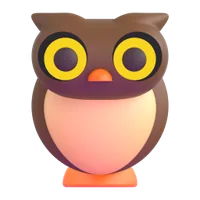
| an owl | a dog |
| an elephant | a banana |
| an umbrella | a kite |
| an ant | a bus |
| an ice cream | a drum |
| an orange | a book |
| an octopus | a cow |
These are exactly the pictures in the game, so the table works as a small chart you can print from your browser and stick near the study table.
How to play
- Golu asks the question in English ("a egg, or an egg?") and, if Hindi is on, in Hindi too: "तस्वीर के साथ बोलो। a लगेगा या an?"
- Your child says both out loud if they can, and taps the one that sounds right.
- The right answer slides into the gap, the phrase is spoken, and Golu gives the rule in your first language.
- A wrong tap only brings a gentle "try again". A second miss makes the right button glow; a third shows a pointing hand. There is no buzzer and no score.
- After a short round, a marble drops into the Goli Jar and a small mission appears.
The Hindi word is shown under each picture (सेब, अंडा, उल्लू), so the page also builds English vocabulary for children who speak Hindi at home.
How to teach a and an at home
Start with vowels
Children cannot use the a and an rule until they know the vowels. If a e i o u is still new, begin with vowels for kids for a few days. Sing the five vowels, and clap once for each one.
The kitchen game
Put an egg, an onion, a spoon, an apple and a cup on the table. Hold up one thing at a time and ask your child to name it with a or an. Say both versions if they are unsure: "a onion? an onion?" Most children choose correctly once they hear both.
Hand signal
Agree on a signal: one finger for a, a whole open hand for an. When you name things on a walk ("an auto!", "a tree!"), your child shows the signal. It turns grammar into a quick, silent game.
From words to sentences
Once a and an feel easy, put them into full sentences: "I see an owl." "I have a kite." The make a sentence game builds sentences like these word by word, and simple sentences for kids gives short lines to read.
Tricky words (for class 1 and older)
Because the rule is about sound, a few words break the letter pattern. We say an hour (the h is silent) and a uniform (it starts with a "yoo" sound). Do not teach these to a four or five-year-old; they only confuse. For class 1 and class 2, you can add them once the basic rule is solid, and explain again: "Listen to the first sound, not the first letter."
This game uses only clear, regular examples, so young children see the pattern without exceptions.
A and an explained in Hindi
Hindi does not have a and an. We usually say एक ("one"), as in एक सेब, or nothing at all. That is why children in Hindi-speaking homes sometimes forget a and an in English. A quick explanation in Hindi helps: "a, e, i, o, u की आवाज़ से पहले an लगता है, बाकी से पहले a." The game says this line for you when Hindi is the first language.
Which age and class learns a and an?
| Stage | Goal |
|---|---|
| LKG (4-5) | Hear and say "a cat", "an apple" in play. No rule yet. |
| UKG (5-6) | Choose a or an for a picture. Know the vowels. |
| Class 1 (6-7) | Fill a/an in written sentences. Meet "the" and "one and many" (a cat, two cats). |
| Class 2 | Exceptions like an hour, a uniform. |
A and an worksheet ideas
You do not need a printed a and an worksheet. Draw six small pictures on a page, three that need an and three that need a, and let your child write or circle the right word. For UKG, a coloured dot is enough: red dot for a, blue for an. Keep it to five minutes. There is no PDF on this site; print this page if you want the chart above on paper.
Keep it light and positive
Grammar should feel like a word game, not a test. If your child says "a apple", simply repeat it back the right way ("Yes, an apple!") without calling it wrong. Praise listening: "You said both and picked the smooth one." For children with speech delay, a tap on the right button counts just as much as saying it. In bilingual homes, keep the rule short and consistent.
Short sessions work best: one round of the game with you sitting beside your child, then real-world practice. Children under two do better with real objects and your voice than with a screen.