Domestic Animals Name in English and Hindi with pictures
15 words · tap 🔊 to hear each one.
| Picture | English | Hindi | Say it | Listen |
|---|---|---|---|---|
 | Cow | गाय | Gaay | |
 | Bull | बैल | Bail | |
 | Buffalo | भैंस | Bhains | |
 | Goat | बकरी | Bakri | |
 | Sheep | भेड़ | Bhed | |
 | Horse | घोड़ा | Ghoda | |
 | Donkey | गधा | Gadha | |
 | Camel | ऊँट | Oont | |
 | Pig | सूअर | Suar | |
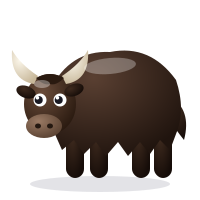 | Yak | याक | Yaak | |
 | Dog | कुत्ता | Kutta | |
 | Cat | बिल्ली | Billi | |
 | Rabbit | खरगोश | Khargosh | |
 | Hamster | हैम्स्टर | Hamster | |
 | Mouse | चूहा | Chooha |
This page teaches domestic animals name for kids in Hindi and English, with pictures and clear audio. There are 15 animals: 10 farm animals (cow, bull, buffalo, goat, sheep, horse, donkey, camel, pig and yak) and 5 pet animals (dog, cat, rabbit, hamster and mouse). Tap the cow and your child hears गाय and "cow"; tap the dog and hears कुत्ता and "dog".
What is a domestic animal? (domestic animals kya hota hai)
A domestic animal lives with people and is cared for by them. People give it food, water and a safe place to sleep, and in return many domestic animals help us: the cow and buffalo give milk, the sheep gives wool, the horse, donkey and camel carry loads, and the bull (ox) pulls a plough or a cart. In Hindi they are called पालतू जानवर (paaltu janvar). A wild animal, like a tiger, looks after itself in nature; you can compare both on our wild animals name page.
Farm animals and pet animals: what is the difference?
What is farm animals, and what is pet animals list? Both are domestic. Farm animals live on farms, in sheds, pens and stables, and help with food and work. Pet animals live inside or close to our homes as friends. Children aged 3-5 enjoy sorting them into two groups.
| Group | Animals in the game | How they help or live with us |
|---|---|---|
| Milk animals | Cow, buffalo, goat, yak | Give milk for curd, paneer, ghee and chai |
| Work animals | Bull (ox), horse, donkey, camel, yak | Pull carts and ploughs, carry loads in hills and deserts |
| Wool animal | Sheep | Gives soft wool for sweaters |
| Farm animal | Pig | Kept on farms; pigs are clever and like mud to stay cool |
| Pets | Dog, cat, rabbit, hamster, mouse | Live at home as friends and need our care every day |
Easy domestic animals name for kids, by age
- Age 2-3: five familiar animals are plenty: cow, dog, cat, goat and horse. Model the sounds too: "The cow says moo."
- Age 3-4: learn 10 domestic animals, add buffalo, sheep, donkey, pig and rabbit, and play Find it with 3 choices.
- Age 4-5: all 15, plus the babies (calf, kid, lamb, foal, puppy, kitten) on our animals and their babies page.
- Age 5-6: sort farm and pet animals, name how each one helps us, and try writing short names like cow, pig, cat and dog.
This matches the usual domestic animals name for nursery class, LKG and UKG lessons in India, and works as quick revision for domestic animals name for class 1.
How to use this page
Start in Listen mode: tap any picture to hear its name. Find it asks "Where is the goat?" with 2-4 big choices. Sounds plays a sound word like "baa" or "neigh" and asks who makes it, so your child can learn farm animals names and sounds together. Silly or right? says things like "The dog says moo!" and your child decides. Memory is a pairs game.
Wrong taps get a kind hint, and every round ends with a marble in the Goli Jar. Use the अ+A button to change the language order. Settings sit behind a grown-up check and let you set age, fewer choices and calm sound.
Domestic animals name chart, list and worksheet
The word list above is a domestic animals name chart with pictures, with the Hindi name, the English name and a pronunciation guide for each animal. There is no PDF file; print this page from your browser if you want a paper chart for the wall or a notebook. The printout also works as a domestic animals list for kids and a pet animals name chart for homework.
To make a simple pet animals name worksheet, draw a house and a farm on paper. Say an animal name and let your child draw a line from its picture to the right place. For older children, write the first letter and let them finish the word.
How to teach farm animals for preschoolers at home
Domestic animals for preschool are easy to teach because children can see many of them in real life. Try these 5-10 minute ideas:
- Milk time: while pouring milk, ask "Who gave us this milk?" Talk about the cow, buffalo and goat.
- Street spotting: on a walk, count dogs, cows and goats. In cities, look for the dog and cat; in villages, the bullock cart.
- Toy farm: make a farm from a shoebox, with a shed for the cow and a pen for the goat.
- Act it out: gallop like a horse, hop like a rabbit, and say "hee-haw" like a donkey.
- Animal song: sing "Old MacDonald had a farm" with Hindi names mixed in.
Teach kindness with the names: "Dogs like gentle pats. We do not pull a cat's tail." Always ask the owner before touching any animal, and wash hands afterwards.
Domestic animals in India and around the world
In India, cows are decorated during Pongal and Gopashtami, and bulls are honoured at Pola in Maharashtra. Camels carry people and goods across the Thar Desert, and the camel fair at Pushkar is famous. Yaks help families in cold, high places like Ladakh and Sikkim. In the UK, USA and Australia, children often see sheep, horses and pigs on farm visits. Wherever you live, start with the animals your child meets.
- A cow has four parts to its stomach, which helps it digest grass.
- A horse can sleep standing up.
- A rabbit's front teeth keep growing all its life.
- Dogs have a very strong sense of smell.
Gentle, inclusive learning
Keep it fun and short. If your child is scared of dogs, start with the picture only, and never force a real meeting. Praise tries: "You remembered the buffalo!" If they get upset, switch to Listen mode or stop.
Children with speech delay can point or make the animal sound first; sounds like "moo" often come before words. Autistic children may like the steady routine of Memory and sorting. Bilingual families can mix Hindi and English freely. If you are worried about speech or development, talk to your paediatrician.
Sit with your child and keep screen sessions short. For children under 2, real animals, toys and picture books with a grown-up are better than any screen.
More to explore: animal sounds for kids, animals and their homes and birds name, which includes the hen, duck and turkey.