Reptiles Name in English and Hindi with pictures
11 words · tap 🔊 to hear each one.
| Picture | English | Hindi | Say it | Listen |
|---|---|---|---|---|
 | Snake | साँप | Saanp | |
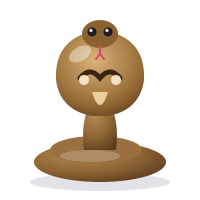 | Cobra | नाग | Naag | |
 | Lizard | छिपकली | Chhipkali | |
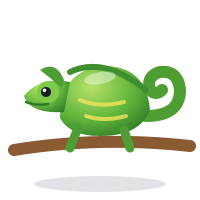 | Chameleon | गिरगिट | Girgit | |
| Monitor Lizard | गोह | Goh | |
 | Crocodile | मगरमच्छ | Magarmachh | |
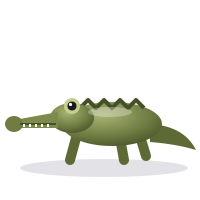 | Gharial | घड़ियाल | Ghadiyaal | |
 | Turtle | कछुआ | Kachhua | |
| Tortoise | थल कछुआ | Thal Kachhua | |
 | T-rex | टी-रेक्स | T-rex | |
 | Long-neck Dinosaur | लंबी गर्दन वाला डायनासोर | Lambi Gardan Vaala Dinosaur |
Reptiles name for kids is where the house lizard on the kitchen wall meets the T-rex in your child's picture book. On this page your child taps a picture and hears the name in clear audio in Hindi and English: साँप and snake, छिपकली and lizard, मगरमच्छ and crocodile. There are 11 cards here: nine reptiles that live today, including the Indian gharial and the monitor lizard, plus two dinosaurs from long ago, the T-rex and a long-neck dinosaur.
What are reptiles? (How to explain reptiles to a child)
A reptile is an animal with dry, scaly skin that usually hatches from an egg. Reptiles cannot make their own body warm, so you often see a lizard or a crocodile resting in the sun to warm up. For a preschooler, say it simply: "Reptiles have scales, and many lie in the sun." For a five- or six-year-old, add eggs and the idea that snakes, lizards, crocodiles and turtles all belong to the same family.
So what is the reptiles name in Hindi? The word is सरीसृप (sarisrip), which means "one that crawls". Baby reptiles are called hatchlings, because they hatch from eggs.
What your child learns, and at what age
- Age 3-4 (nursery class): 4 to 5 easy reptiles, such as the snake, lizard, turtle and crocodile, and the idea of "scaly skin".
- Age 4-5 (LKG and UKG): about 10 names, simple facts ("a snake has no legs", "a chameleon changes colour"), and the difference between a turtle and a tortoise.
- Age 5-6 (class 1 and class 2): all 11 names in English and Hindi, sorting reptiles into land and water, and the idea that dinosaurs lived long ago and are gone now.
Toddlers under three can enjoy the pictures with you, but keep it light and friendly; big crocodile pictures are best shown on your lap.
How to play the reptiles game
This page has three modes. Listen is a picture board: tap a reptile to hear its name and a short fact. Find it says "Where is the turtle?" and shows two to four big pictures. Memory is a pairs game that suits five- and six-year-olds. Games never say "wrong": a wrong tap names what was tapped, then the right card glows, then Golu the marble points to it. Each game ends with a marble in the Goli Jar; count the marbles together.
Use the अ+A button to hear Hindi first, English first or only one language. In Settings (behind a grown-up check) you can set your child's age, which changes how many pictures appear, and turn on calm motion or calm sound.
A snake or a cobra can hiss, so ask your child to copy the reptiles' sounds: a soft "sss". Most reptiles are quiet animals, which is why this page has no sound quiz.
Reptiles list for kids: land and water
The word list above shows every card with a picture, Hindi, pronunciation and a 🔊 button. Print this page and it becomes a clear reptiles name chart with pictures. The table below adds one easy fact for each, so you can talk as you point.
| Reptile | Hindi | Lives mostly | Easy fact |
|---|---|---|---|
| Snake | साँप | Land | No legs; it moves by sliding. |
| Cobra | नाग | Land | Spreads a hood on its neck. |
| Lizard | छिपकली | Land, walls | Can walk on walls and ceilings. |
| Chameleon | गिरगिट | Trees | Can change its colour. |
| Monitor lizard | गोह | Land | A very big lizard with a long tail. |
| Crocodile | मगरमच्छ | Rivers and lakes | Rests in the sun with its mouth open. |
| Gharial | घड़ियाल | Rivers | A long, thin snout for catching fish. |
| Turtle | कछुआ | Water | Has flippers for swimming. |
| Tortoise | थल कछुआ | Land | Walks slowly with sturdy feet. |
5 reptiles name for beginners
Start with five easy reptiles: snake, lizard, turtle, crocodile and chameleon. Add the cobra, tortoise, gharial and monitor lizard for nine, and the two dinosaurs make 11. If your school asks for 10 reptiles name in English, the nine living reptiles plus the T-rex will do, though a teacher may prefer a real living reptile such as the iguana or alligator for the tenth.
For UKG, a reptiles names list of 5 to 10 is plenty. For class 2, name types of reptiles (snakes, lizards, crocodiles, turtles) and write the reptiles name list in English on one side and Hindi on the other. Older children can extend it to 15 or 20 reptiles with a library book.
Dinosaurs for kids: facts for ages 3-6
Dinosaurs were reptiles that lived a very, very long time ago, millions of years before any people. Nobody has seen a living dinosaur; we know about them from their bones and footprints, called fossils. Here are simple facts that are true and gentle for young children:
- What is a T-rex, for kids? Tyrannosaurus rex was one of the biggest meat-eating dinosaurs. It walked on two strong legs and had tiny arms.
- The long-neck dinosaur (such as the one scientists call a sauropod) ate leaves from tall trees and was as long as a few buses.
- What happened to dinosaurs? Most scientists think a huge rock from space hit the Earth, the weather changed, and the big dinosaurs could not survive. For small children, "they lived long, long ago and they are all gone now" is enough.
- Birds are their cousins. Scientists say today's birds came from small dinosaurs, so the sparrow at your window is a tiny relative.
- India had dinosaurs too. Dinosaur fossils and eggs have been found in Gujarat and Madhya Pradesh.
Why is my child obsessed with dinosaurs?
Many children aged 3-5 go through a dinosaur phase, and it is a wonderful thing. Dinosaurs are big, powerful and safely far away, and their long names give children something to master. Use it: count dinosaur toys, sort them by size, and make up a short dinosaur story for kids in Hindi or English at bedtime. To teach toddlers about dinosaurs, keep it to "big", "long neck" and "stomp stomp" and let them roar.
To learn about dinosaurs together, borrow a dinosaurs picture book from the library, play with dinosaurs toys in a sand tray, or try dinosaurs drawing with big crayons. Dinosaurs games like "stomp like a T-rex" need no screen at all.
How to teach reptiles at home in 5-10 minutes
- Lizard spotting. The house lizard (छिपकली) is the reptile most Indian children see. Look for it near a light at night and talk about how it catches insects.
- Scale touch. Let your child feel a pine cone or a fish-scale pattern cloth and say "reptiles feel scaly".
- Slow and fast race. Walk like a tortoise, slide like a snake, and stomp like a T-rex.
- Drawing. A turtle is an easy drawing: a half circle shell, four legs and a head. Draw a snake as a long wavy line with a smile.
- Zoo or river trip. The gharial and crocodile can be seen at many Indian zoos and crocodile parks; watch them from behind the railing.
Safety first: teach children never to touch a snake or a big lizard, even a small one, and to step back and call a grown-up. Most snakes want to stay away from people.
Chart and worksheet ideas
There is no PDF download, but you can print this page from your browser. The word list becomes a reptiles and dinosaurs chart with pictures. Cover the Hindi column and ask for the Hindi name, or cover the pictures and read the names. For UKG and class 1, cut out the pictures and sort them into "land" and "water" on a sheet of paper.
For a dinosaurs worksheet, draw the outline of a T-rex and a long-neck dinosaur and ask your child to colour them and write their names. A nursery class can simply circle the reptiles name picture that matches the word you say. These free, educational ideas need only paper and crayons.
Explore more animals: water animals name for turtles' neighbours, wild animals name in Hindi, insects name for kids and birds name in Hindi and English, the dinosaurs' living cousins.
If your child feels scared
Snakes and crocodiles can feel scary. Keep the tone calm, show the friendly turtle first, and skip a picture if your child asks. Praise curiosity: "You asked a great question about the cobra." If your child gets frustrated in a game, go back to Listen. For speech delay, pointing counts as an answer; for autistic children, calm motion and calm sound help. Keep screen time short and shared, and remember that under-twos learn more from a grown-up and real play than from a screen. If you are worried about your child's development, talk to your paediatrician.