Flowers Name in English and Hindi with pictures
25 words · tap 🔊 to hear each one.
| Picture | English | Hindi | Say it | Listen |
|---|---|---|---|---|
 | Lotus | कमल | Kamal | |
 | Rose | गुलाब | Gulaab | |
 | Sunflower | सूरजमुखी | Soorajmukhi | |
 | Marigold | गेंदा | Genda | |
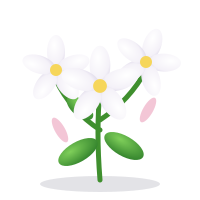 | Jasmine | चमेली | Chameli | |
 | Hibiscus | गुड़हल | Gudhal | |
 | Tulip | ट्यूलिप | Tyoolip | |
 | Daisy | डेज़ी | Deizi | |
 | Mogra | मोगरा | Mogra | |
 | Bouquet | गुलदस्ता | Guldasta | |
 | Cherry Blossom | चेरी का फूल | Cheri ka Phool | |
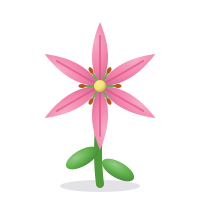 | Lily | लिली | Lili | |
 | Hyacinth | हायसिंथ | Haayasinth | |
 | Frangipani | चंपा | Champa | |
 | Wilted Flower | मुरझाया फूल | Murjhaaya Phool | |
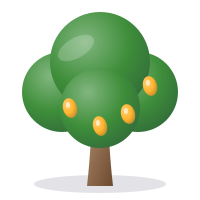 | Mango Tree | आम का पेड़ | Aam ka Ped | |
 | Coconut Tree | नारियल का पेड़ | Nariyal ka Ped | |
 | Seedling | पौधा | Paudha | |
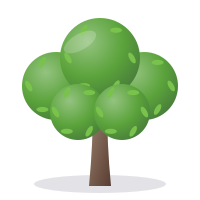 | Neem Tree | नीम | Neem | |
 | Banyan Tree | बरगद | Bargad | |
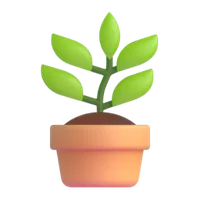 | Tulsi Plant | तुलसी | Tulsi | |
 | Cactus | नागफनी | Naagphani | |
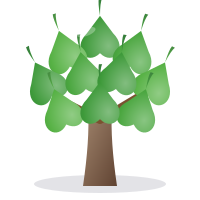 | Peepal Tree | पीपल | Peepal | |
 | Pine Tree | चीड़ | Cheed | |
 | Bamboo | बाँस | Baans |
Flowers name in Hindi and English is a happy first topic, because flowers and trees are part of daily life in India: marigold garlands at the door, jasmine in a grandmother's hair, the neem tree outside school. On this page your child taps a picture and hears the name in clear audio in both languages, like कमल and lotus, गुलाब and rose, or बरगद and banyan tree. There are 25 pictures: 15 flowers and 10 trees and plants, including the neem, peepal, mango and coconut trees and the tulsi plant.
What your child learns, and at what age
- Age 2-3: the words "flower" and "tree", and two or three flowers they can touch and smell, such as the rose and marigold.
- Age 3-4 (nursery class): about 5 to 10 flowers name in Hindi and English, flower colours, and the difference between a flower and a tree.
- Age 4-5 (LKG and UKG): 10 to 15 flowers and 5 to 10 trees, simple facts ("the lotus grows in water"), and what we get from trees.
- Age 5-6 (class 1 and class 2): all 25 names, reading and writing easy ones, India's national flower and tree, and the parts of a plant.
How to play the flowers game
There are three modes. Listen is a picture board: tap a flower or tree to hear its name. Find it asks "Where is the sunflower?" and shows two to four big pictures. Memory is a pairs game. Games never say "wrong": a wrong tap names what was tapped, then the right picture glows, then Golu the marble points to it. Every game ends with a marble in the Goli Jar, and your child can tap the jar to count them with you.
The अ+A button sets the order: Hindi then English, English then Hindi, Hindi only or English only. Settings, behind a grown-up check, let you set your child's age so the number of choices fits, and turn on calm sound or high contrast.
Flowers names list by colour
The word list above has every picture with its English and Hindi name, pronunciation and a 🔊 button. Print this page from your browser and it becomes a flowers name chart for kids with pictures. Children remember flowers by colour first, so here are the same flowers sorted that way.
| Colour | Flowers in English | Flowers in Hindi | Where you may see them |
|---|---|---|---|
| Yellow and orange | Marigold, sunflower | गेंदा, सूरजमुखी | Garlands, temples, fields |
| White | Jasmine, mogra, frangipani, lily | चमेली, मोगरा, चंपा, लिली | Hair, prayers, gardens |
| Red | Rose, hibiscus | गुलाब, गुड़हल | Gardens, pots at home |
| Pink | Lotus, cherry blossom | कमल, चेरी का फूल | Ponds; hills and Japan |
| Many colours | Tulip, daisy, hyacinth, bouquet | ट्यूलिप, डेज़ी, हायसिंथ, गुलदस्ता | Flower shops, Kashmir tulip garden |
The deck also has a wilted flower (मुरझाया फूल), which is a gentle way to talk about watering plants. Roses come in many colours, not only red, so ask your child which rose colour they like best. The yellow colour flowers are the easiest to spot: marigold and sunflower.
Trees name in English and Hindi
Trees name for kids is often the next question after flowers. These are the 10 trees and plants in the game, with something to say about each. They are some of the most common trees name in India.
| Tree or plant | Hindi | Something to say |
|---|---|---|
| Neem tree | नीम | Its leaves are bitter, and it gives cool shade. |
| Banyan tree | बरगद | India's national tree; roots hang down from its branches. |
| Peepal tree | पीपल | Heart-shaped leaves that flutter in the wind. |
| Mango tree | आम का पेड़ | Gives mangoes in summer. |
| Coconut tree | नारियल का पेड़ | Tall and thin, near the sea. |
| Tulsi plant | तुलसी | A small plant kept in many courtyards. |
| Bamboo | बाँस | A very tall grass that grows fast. |
| Cactus | नागफनी | Grows in dry places and has spines. |
| Pine tree | चीड़ | Grows in the hills and has needle-like leaves. |
| Seedling | पौधा | A baby plant that has just come out of a seed. |
How to learn flowers name at home in 5-10 minutes
- Smell and say. Hold a rose, jasmine or marigold to your child's nose and say the name in both languages. Scent makes words stick.
- Garland counting. Count the marigolds in a garland at a festival like Diwali or a wedding, and name their colour.
- Tree hug walk. On a park walk, stop at three trees. Touch the bark, look at the leaf shape, and name them. Neem, peepal and banyan are easy to find in most Indian towns.
- Leaf and petal art. Collect fallen petals and leaves (never pluck from someone's garden) and stick them on paper with the names written below.
- Grow one. Plant a marigold seed or a sunflower seed in a cup and water it together. Watching it grow teaches patience and naming at once.
If your child asks "flowers name kaise likhe" (how to write flower names), start with short words: rose, lily, daisy in English; कमल and गेंदा in Hindi. Say each sound slowly while your child writes.
Flowers and trees chart and worksheet ideas
There is no PDF download, but printing this page gives you a clean chart with every picture and its name in Hindi and English. For a flowers name worksheet, fold the printout to hide the names and ask your child to say them. For a trees name worksheet, cut out the tree pictures and let your child sort them into "gives fruit" (mango, coconut) and "gives shade" (neem, banyan, peepal). A nursery class teacher can project the Find it game and invite children up one by one.
Quick question and answer practice: "Which flower grows in a pond?" (lotus). "Which flower turns to face the sun?" (sunflower, especially when young). "Which tree has hanging roots?" (banyan).
India's national flower and tree, and a global note
The lotus (कमल) is India's national flower; it grows in muddy ponds yet blooms clean and bright. The banyan (बरगद) is India's national tree, and some banyan trees are so big that one tree looks like a small forest. In spring, Srinagar's tulip garden fills with colour, and in the hills people enjoy pink cherry blossoms, which are also loved in Japan. Around the world, children learn daisies and tulips in the UK and Europe, and sunflowers in fields from Karnataka to Ukraine.
Keep exploring: parts of a plant for kids, colors name in Hindi and English for flower colours, insects name for the bees and butterflies that visit flowers, and seasons for kids to see when flowers bloom.
Tips for every child
Praise curiosity rather than correct answers: "You noticed the petals are soft!" If your child gets frustrated in a game, go back to Listen, which has no questions. For speech delay, a point or a sniff counts; say the name for your child and wait. Autistic children often enjoy the quiet, predictable Listen board, and calm sound can help. In bilingual homes, let each grown-up use their own language with the same flower. Keep screen time short and shared, and remember that children under two learn far more from a real flower in a grown-up's hand than from any screen. If you are worried about your child's speech, talk to your paediatrician.
How to use this page at home
Say it, then find it
Play for a few minutes, then look for the same thing away from the screen: flowers name on the shelf, in the kitchen, on the way to school. A child learns a word properly when they meet it twice, once on the screen and once in their hand.
Ten minutes is enough
Short and happy beats long and tired. Stop while your child still wants more, and come back tomorrow: the same page on five short days teaches far more than one long sitting. Nothing here is scored, so there is no reason to push.
Use both languages
Tap the language button at the top to hear the words in your home language first and the second language after. Hearing the same picture named in two languages is one of the few things research agrees builds attention as well as vocabulary.