National Symbols of India in English and Hindi with pictures
14 words · tap 🔊 to hear each one.
| Picture | English | Hindi | Say it | Listen |
|---|---|---|---|---|
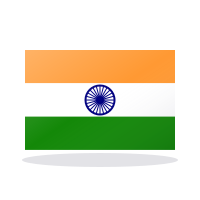 | National Flag | राष्ट्रीय ध्वज (तिरंगा) | Rashtriya dhvaj (Tiranga) | |
| National Emblem | राष्ट्रीय प्रतीक | Rashtriya prateek | ||
 | National Anthem | राष्ट्रगान | Rashtragaan | |
 | National Song | राष्ट्रगीत | Rashtrageet | |
 | National Animal: Tiger | राष्ट्रीय पशु: बाघ | Rashtriya pashu: Baagh | |
 | National Bird: Peacock | राष्ट्रीय पक्षी: मोर | Rashtriya pakshi: Mor | |
 | National Flower: Lotus | राष्ट्रीय पुष्प: कमल | Rashtriya pushp: Kamal | |
 | National Fruit: Mango | राष्ट्रीय फल: आम | Rashtriya phal: Aam | |
 | National Tree: Banyan | राष्ट्रीय वृक्ष: बरगद | Rashtriya vriksh: Bargad | |
 | National River: Ganga | राष्ट्रीय नदी: गंगा | Rashtriya nadi: Ganga | |
 | National Aquatic Animal: River Dolphin | राष्ट्रीय जलीय जीव: गंगा डॉल्फ़िन | Rashtriya jaliya jeev: Ganga dolphin | |
 | Currency Symbol: Rupee | मुद्रा चिह्न: रुपया | Mudra chinh: Rupaya | |
 | Hockey | हॉकी | Hockey | |
 | National Calendar: Saka | राष्ट्रीय पंचांग: शक संवत | Rashtriya panchaang: Shak samvat |
The national symbols of India for kids start with things a child already knows: the tiranga on a school gate, a peacock in a picture book, a mango in summer, a lotus in a temple pond. This page turns those everyday sights into 14 picture cards, each spoken in Hindi and English, so your child learns each one with its name, picture and a short fact. Below the game you will find the word list, which works as a ready chart you can print, and ideas for school projects, fancy dress and drawing.
What is a national symbol of India?
A national symbol is a picture, song, animal, plant or sign that stands for the whole country. When a child asks "national symbols of India kya hai?", a simple answer works best: "They are special things that remind every Indian of our country, like our flag and our song." The national symbols of India represent our history (the lions of Sarnath), our nature (the tiger, the banyan tree, the Ganga) and our shared values (the words Satyameva Jayate, "truth alone triumphs").
How many are there? Parents often search "national symbols of India kitne hote hain" or "what are the 17 national symbols of India". Lists online vary because some add things that were never declared. This page follows the Government of India's Know India portal and keeps to symbols you can check there, plus the rupee sign.
List of national symbols of India with names and facts
The word list above gives every card with its Hindi name and pronunciation. This table adds the one fact that helps a school project or a GK question.
| Symbol | In Hindi | Useful fact for kids |
|---|---|---|
| National Flag | तिरंगा | Saffron, white and green, with a navy blue Ashoka Chakra of 24 spokes. Adopted on 22 July 1947. |
| State Emblem | राष्ट्रीय प्रतीक | Taken from the Lion Capital of Ashoka at Sarnath. Motto सत्यमेव जयते. Adopted on 26 January 1950. |
| National Anthem | जन गण मन | Written by Rabindranath Tagore. The full version takes about 52 seconds. |
| National Song | वन्दे मातरम् | Written by Bankim Chandra Chattopadhyay. It has equal honour with the anthem. |
| National Animal | बाघ | The tiger, a strong and graceful big cat of Indian forests. |
| National Bird | मोर | The peacock, known for its dance and its blue-green tail feathers. |
| National Flower | कमल | The lotus grows in muddy ponds yet blooms clean and bright. |
| National Tree | बरगद | The banyan tree drops roots from its branches and can spread very wide. |
| National Fruit | आम | India grows hundreds of kinds of mango. |
| National River | गंगा | The Ganga starts from the Gangotri glacier in the Himalayas. |
| National Aquatic Animal | गंगा डॉल्फ़िन | The Ganges river dolphin lives in fresh water and is almost blind. |
| National Calendar | शक संवत | The Saka calendar, adopted on 22 March 1957. Its year begins in Chaitra. |
| Currency Symbol | ₹ रुपया | The rupee sign was chosen in 2010. |
Is hockey the national game of India? Many books say so, but the Government of India has never officially declared any national game. The Ministry of Youth Affairs and Sports has confirmed this in reply to right-to-information questions. The hockey card is here because India has won eight Olympic gold medals in hockey, a proud record, but we call it "a game India loves", not the national game. If your child's textbook says otherwise, it is fine to follow the book for the exam and share the fuller story at home.
Other facts children enjoy: the elephant was named India's National Heritage Animal in 2010, and the tiger became the national animal in 1973, the year Project Tiger began. The full Know India list also includes the national pledge and oath, which older children meet at school assembly.
How to use this page with your child
The three games
- Listen: tap any card and hear its name, for example "National Bird: Peacock" and राष्ट्रीय पक्षी: मोर, with a one-line fact.
- Find it: Golu asks "Where is the lotus?" and your child taps the right picture from 2 to 4 big choices. A wrong tap never hears "wrong". It hears the name of what was tapped, then the answer glows, then Golu points.
- Memory: turn over cards to find matching pairs. It is a good national symbols of India game for 5- and 6-year-olds.
Each game ends with a marble in the Goli Jar. Tap the jar and count the marbles together. The अ+A button in the header changes the order of languages (Hindi then English, English then Hindi, or one language only), which helps if your child learns national symbols of India in Hindi at school but speaks English at home, or the other way round. In Settings, behind a grown-up check, you can set your child's age, fewer choices, calm sound and calm motion.
What your child can learn at each age
| Age | Realistic goal | Try this |
|---|---|---|
| 2-3 | Point to the flag, tiger, peacock, lotus and mango when named | Listen mode only, with you sitting beside them. Make the tiger roar and the peacock dance. |
| 3-4 (nursery, LKG) | Say the Hindi and English names of 5 symbols | Find it on the easiest setting. Stand still for the anthem at a school event. |
| 4-5 (UKG) | Name 8-10 symbols and one fact each | Match the following: symbol to picture. Sort "animals, plants, songs". |
| 5-6 (class 1, class 2) | Name all symbols, say what the flag colours mean, answer simple GK questions | Memory game, a small project, a two-line speech. |
At 2-3 years a child is building nouns, so the goal is recognition, not facts. By 5-6, children enjoy "why" answers: why a lotus stays clean, why the banyan has hanging roots. This is where national symbols of India for class 1 fits well.
How to teach national symbols of India at home
Five to ten minutes a day is plenty. Mix the screen game with real objects, because children remember what they have touched and seen.
- Kitchen: hold up a mango and ask "Which symbol is this?" In winter, use a picture instead.
- Wallet: show a coin or note and find the ₹ sign and the Sarnath lions of the emblem on it.
- Park or temple: look for a banyan tree, a lotus pond or a peacock. Say both names aloud.
- Festival days: on 15 August and 26 January, make a paper flag with the stripes in the right order (saffron on top, green at the bottom).
- Songs: play जन गण मन and practise standing still, then talk about Tagore.
Teach three new symbols in a week, not all fourteen at once. Start with the ones your child can see (flag, fruit, flower, bird), then add songs and the calendar later.
Drawing, fancy dress and school projects
Easy drawing ideas for kids
For a drawing competition, the easiest national symbols of India to draw are the flag (three rectangles and a wheel), the lotus (a bowl of petal shapes), the mango (a tilted oval with a leaf) and the rupee sign. A peacock is a great challenge for 5-year-olds: draw a small body, then a big fan of feather "eyes". Black and white outline pictures work well for colouring, so let your child draw the outline and colour it in with crayons.
Fancy dress ideas
For a national symbols of India fancy dress competition, a child can be a peacock (a cardboard fan of feathers), a tiger (orange t-shirt with black stripes), a lotus (pink paper petals around the waist) or a banyan tree. Give your child a two-line speech: "I am the peacock, the national bird of India. I dance when the rain comes." Short lines are easier to say on stage.
A simple project or chart
For a national symbols of India project, fold a chart paper into 12 boxes. Paste or draw one symbol in each, write its name in English and Hindi, and add one fact from the table above. You can also print this page from your browser: the word list prints as a clean national symbols of India chart with names and pictures, which you can use as a worksheet by covering the names. We do not offer a PDF download, so use your browser's print option. Rangoli with a tiranga or lotus pattern is another lovely activity for Republic Day.
National symbols of India GK questions and answers
- What is the national animal of India? The tiger (बाघ).
- What is the national bird of India? The peacock (मोर).
- What is the national flower of India? The lotus (कमल).
- What is the national tree of India? The banyan tree (बरगद).
- What is the national aquatic animal? The Ganges river dolphin.
- What is the national emblem of India called? The State Emblem, taken from the Lion Capital of Ashoka at Sarnath.
- Name five national symbols of India. Flag, emblem, anthem, tiger and peacock.
Turn these into a quick quiz at dinner. Let your child ask you the questions too; children love catching a grown-up "forgetting".
Calm, pressure-free learning
Praise effort ("You remembered the Hindi word for tree!") rather than scores. If your child gets frustrated, switch to Listen mode, reduce the choices in Settings, or step away and look at a real mango. For children with speech delay, pointing counts as knowing; let them tap before they say. Autistic children often enjoy the predictable card layout and calm sound option. In bilingual homes, pick one language at a time with the अ+A button, then add the second. Keep sessions short and play together: for children under 2, a grown-up with a real flag or flower is better than a screen, and for 2- to 5-year-olds, short co-play sessions work best. Talk to your paediatrician if you are worried about your child's speech or development.
Once your child knows the symbols, move on to animals name in Hindi and English, birds name for more feathered friends, flowers name in Hindi, fruits name with pictures or seasons for kids. The national calendar links nicely to months of the year in Hindi.