Swahili alphabet chart with pictures
24 letters · tap 🔊 to hear each one.
| Picture | Letter | Word | Meaning | Listen |
|---|---|---|---|---|
 | A | asali | honey | |
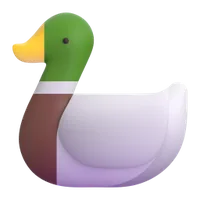 | B | bata | duck | |
 | Ch | chungwa | orange | |
 | D | dubu | bear | |
 | E | embe | mango | |
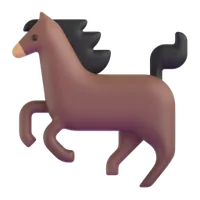 | F | farasi | horse | |
 | G | gari | car | |
 | H | hema | tent | |
 | I | inzi | fly | |
 | J | jua | sun | |
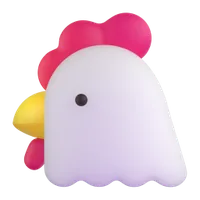 | K | kuku | chicken | |
 | L | limau | lemon | |
 | M | mti | tree | |
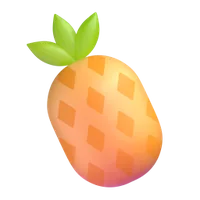 | N | nanasi | pineapple | |
 | O | oga | bathe | |
 | P | paka | cat | |
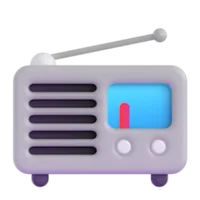 | R | redio | radio | |
 | S | samaki | fish | |
 | T | tembo | elephant | |
 | U | ua | flower | |
 | V | viatu | shoes | |
 | W | wali | cooked rice | |
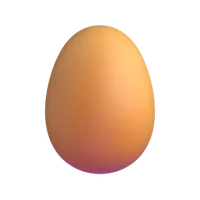 | Y | yai | egg | |
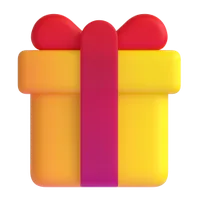 | Z | zawadi | gift |
The Swahili alphabet for kids on this page shows the letters the way a child meets them on a classroom chart in Kenya or Tanzania: one letter, one picture word. A is for asali (honey), B for bata (duck), Ch for chungwa (orange), T for tembo (elephant) and Z for zawadi (gift). Tap any card to hear the letter and its word in clear audio, then play Find it or Memory.
Which letters does Swahili use?
Swahili is written in the Latin alphabet, like English, but it does not need every letter. There is no Q and no X, and C appears only in the pair ch. That is why our chart shows Ch as its own card, the way many East African classrooms do. The cards run: A, B, Ch, D, E, F, G, H, I, J, K, L, M, N, O, P, R, S, T, U, V, W, Y, Z.
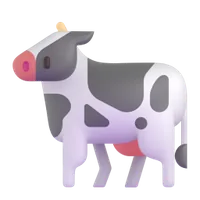
Some sounds are written with two letters, called digraphs: ch (as in "chair"), sh (shule, school), ny (nyumba, house), ng' with an apostrophe (ng'ombe, cow, said like the "ng" in "singer"), and dh, th, gh, which appear in words borrowed from Arabic.
The five vowels: a, e, i, o, u
Swahili has just five vowels (irabu), and each one always keeps the same sound:
| Vowel | Sounds like | Picture word |
|---|---|---|
| A | "a" in "father" | asali (honey) |
| E | "e" in "bed" | embe (mango) |
| I | "ee" in "see" | inzi (fly) |
| O | "o" in "more" | oga (bathe) |
| U | "oo" in "moon" | ua (flower) |
Because vowels never change, English-speaking parents can read Swahili aloud correctly almost at once. Every vowel is pronounced, even at the end of a word: tembo is "TEM-bo", not "temb".
Syllables: ba, be, bi, bo, bu
This is the heart of how Swahili reading is taught. After the vowels, children put each consonant in front of all five vowels and chant them like a song: ba, be, bi, bo, bu; ka, ke, ki, ko, ku; ma, me, mi, mo, mu; pa, pe, pi, po, pu. These are the silabi (syllables). Almost every Swahili syllable ends in a vowel, so once children know the syllable chart, they can build words by joining chunks:
- ba + ba = baba (father)
- ku + ku = kuku (chicken)
- pa + ka = paka (cat)
- ta + ta = tata; ma + ma = mama
- sa + ma + ki = samaki (fish)
Make a syllable chart at home on paper: write the five vowels across the top and a few consonants down the side, then fill the grid. Point and chant together every day for a week, and your child will soon be reading real words.
One easy stress rule
In Swahili, the stress nearly always falls on the second-to-last syllable: ki-TA-bu (book), sa-MA-ki (fish), ha-BA-ri. When your child reads a new word, clap the syllables and make the second-last clap a little louder. It gives Swahili its lovely rolling rhythm.
Practising the Swahili alphabet at home
- Vowels first. Sing a, e, i, o, u and find them on the cards.
- One syllable family a day. ba-be-bi-bo-bu on Monday, ka-ke-ki-ko-ku on Tuesday.
- Build names. Children love reading family words: mama, baba, bibi, babu.
- Letter hunt. Look for letters on packets, signs and books.
- Print this page. The letter chart prints cleanly from your browser for a wall poster. There is no PDF to download.
Because Swahili and English share letters, bilingual children can use our ABCD game, phonics sounds and vowels for kids alongside this page. Just remind them that Swahili vowels always keep one sound.
What to expect by age
At 3-4, children usually know the five vowels and the letters in their own name. At 4-5, many can say syllables like ba, ma, pa and hear the first sound of a word. At 5-6, most can read two- and three-syllable words such as paka, kuku, samaki. Keep it playful and praise effort. For more, visit learn Swahili for kids or practise numbers in Swahili.
Alfabeti ya Kiswahili kwa watoto
Kiswahili kina irabu tano: a, e, i, o, u. Gusa herufi, na mtoto atasikia herufi na neno lenye picha: A – asali, B – bata, Ch – chungwa, T – tembo. Kila herufi ina sauti yake, na maneno huandikwa kama yanavyotamkwa.
Baada ya irabu, jifunzeni silabi: ba, be, bi, bo, bu; ka, ke, ki, ko, ku. Unganisheni silabi kuunda maneno: baba, kuku, paka, samaki. Imbeni silabi kila siku kama wimbo.
Usiharakishe kuandika. Katika umri wa miaka mitano au sita, inatosha kuchora herufi kubwa kwa kidole kwenye mchanga au kwa penseli kwenye karatasi.
How to use this page at home
Say it, then find it
Play for a few minutes, then look for the same thing away from the screen: swahili words on the shelf, in the kitchen, on the way to school. A child learns a word properly when they meet it twice, once on the screen and once in their hand.
Ten minutes is enough
Short and happy beats long and tired. Stop while your child still wants more, and come back tomorrow: the same page on five short days teaches far more than one long sitting. Nothing here is scored, so there is no reason to push.
Use both languages
Tap the language button at the top to hear the words in your home language first and the second language after. Hearing the same picture named in two languages is one of the few things research agrees builds attention as well as vocabulary.