Vegetables in Dutch: word list with pictures
30 words · tap 🔊 to hear each one in Dutch.
| Picture | English | Dutch | Say it | Listen |
|---|---|---|---|---|
 | Potato | de aardappel | ||
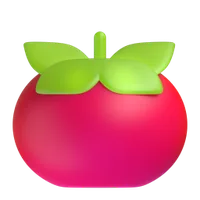 | Tomato | de tomaat | ||
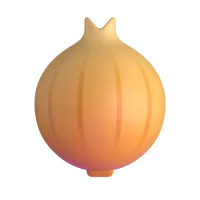 | Onion | de ui | ||
 | Carrot | de wortel | ||
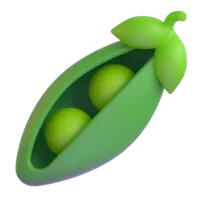 | Peas | de erwtjes | ||
 | Cucumber | de komkommer | ||
 | Brinjal | de aubergine | ||
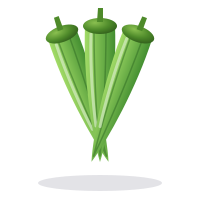 | Okra | de okra | ||
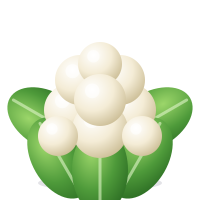 | Cauliflower | de bloemkool | ||
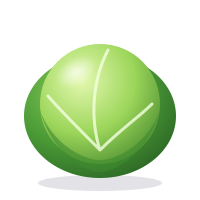 | Cabbage | de kool | ||
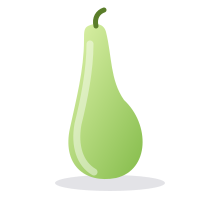 | Bottle Gourd | de fleskalebas | ||
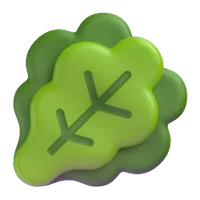 | Spinach | de spinazie | ||
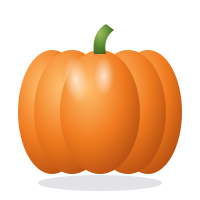 | Pumpkin | de pompoen | ||
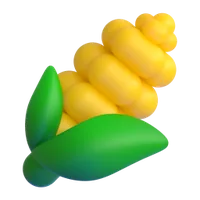 | Corn | de maïs | ||
 | Capsicum | de paprika | ||
 | Chilli | de peper | ||
 | Garlic | de knoflook | ||
 | Ginger | de gember | ||
 | Broccoli | de broccoli | ||
 | Mushroom | de paddenstoel | ||
 | Sweet Potato | de zoete aardappel | ||
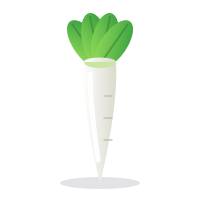 | Radish | de radijs | ||
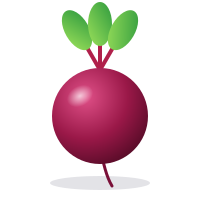 | Beetroot | de rode biet | ||
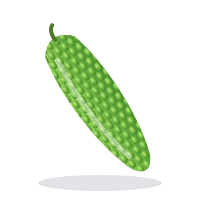 | Bitter Gourd | de bittere meloen | ||
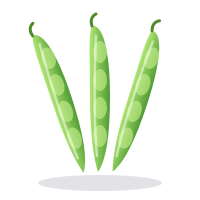 | Green Beans | de sperziebonen | ||
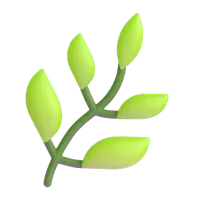 | Coriander | de koriander | ||
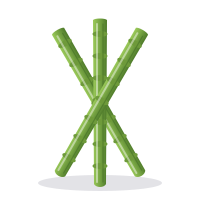 | Drumstick | de moringa | ||
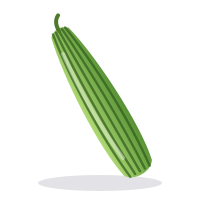 | Ridge Gourd | de torai | ||
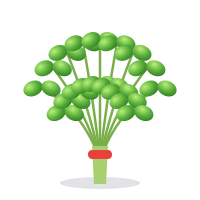 | Fenugreek Leaves | de fenegriek | ||
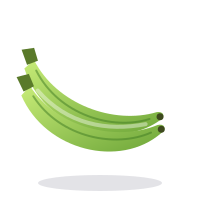 | Raw Banana | de bakbanaan |
Vegetables in Dutch are words your child will use at every dinner, because the Dutch evening meal is traditionally aardappel, groente, vlees: potato, vegetables and meat. This page has 30 vegetables with pictures and clear audio, from de aardappel (potato), de wortel (carrot) and de bloemkool (cauliflower) to de broccoli, de pompoen (pumpkin) and Indian vegetables like de okra. Tap a picture to hear the Dutch and English name, then play Find it or Memory.
Everyday vegetables in Dutch
Start with the vegetables on your own plate: de aardappel, de wortel, de tomaat, de komkommer (cucumber), de erwtjes (peas), de maïs (corn) and de paprika (bell pepper). Then add de ui (onion), de knoflook (garlic), de bloemkool, de spinazie and de sperziebonen (green beans). A carrot is wortel, which also means "root"; small carrots are worteltjes, and some people say peen.
Aardappel means "earth apple", like French pomme de terre. Bloemkool is "flower cabbage" and paddenstoel (mushroom) is literally "toad's stool", a name that makes children giggle. Showing how words are built helps children guess new ones later.
Stamppot and other Dutch vegetable dishes
Dutch winter food is full of vegetables mashed with potato, called stamppot. Children often like it because it is soft and mild. Talking about these dishes is a natural way to repeat vegetable names.
| Dish | Vegetables in it | When |
|---|---|---|
| Hutspot | aardappel, wortel, ui | Winter; eaten in Leiden on 3 October |
| Boerenkoolstamppot | aardappel, boerenkool (kale) | Cold winter days |
| Andijviestamppot | aardappel, andijvie (endive) | All year |
| Erwtensoep | spliterwten, wortel, prei | Thick pea soup for skating days |
Our vegetable list is shared with the site's Indian pages, so it includes bottle gourd (de fleskalebas), bitter gourd (de bittere meloen), drumstick (de moringa) and fenugreek (de fenegriek). You can find many of these at Surinamese, Turkish and Asian shops in Dutch cities.
Growing vegetables with children
Many Dutch schools have a schooltuin (school garden), and families rent a plot at a volkstuin (allotment) or keep a small moestuin (vegetable garden) on the balcony. Radishes (radijsjes) grow fast, tomatoes do well in a pot, and a pumpkin plant is exciting to watch. Children who grow a vegetable remember its name and are much more willing to taste it.
How to teach vegetable names in Dutch at home
- Kitchen helper. Give your child a vegetable to wash and ask "Wat is dit?"
- Pretend shop. Play winkeltje (little shop) with toy vegetables: "Mag ik een tomaat?"
- Soup game. Name each vegetable as it goes into a pan of soup.
- Colour link. "De wortel is oranje, de komkommer is groen." Practise with colours in Dutch.
- Market hunt. Find three vegetables at the market by their Dutch names.
For picky eaters, naming and touching come before tasting. Let your child hold, smell and name a vegetable with no pressure. Many children accept a new food only after meeting it ten or more times.
What to expect by age
At two to three, children learn four to six vegetable names, such as potato, carrot, tomato and peas. At three to four, they name about ten and sort them by colour. At four to five, they describe them: "De pompoen is groot en oranje." At five to six, they sort vegetables into those that grow under the ground and above it. Keep sessions short and shared, and let under-twos explore real vegetables with a grown-up rather than a screen. For English and Hindi names, see vegetables name in Hindi and English.
Dutch has many little words ending in -je or -tje to make things small and friendly, and vegetables are no exception: worteltjes (baby carrots), erwtjes (peas), spruitjes (Brussels sprouts) and radijsjes (radishes). Children use these small forms all the time, so do not be surprised when your toddler asks for worteltjes rather than wortels.
Groente leren voor kinderen
Op deze pagina leert uw kind 30 soorten groente met plaatje en geluid: de aardappel, de wortel, de tomaat, de komkommer, de bloemkool en nog veel meer. Tik op een plaatje en uw kind hoort het woord in het Nederlands en in het Engels.
Laat uw kind meehelpen in de keuken: groente wassen, benoemen en in de pan doen. Maak samen hutspot of boerenkoolstamppot, of zaai radijsjes in een bakje op de vensterbank. Prijs elke poging en dwing uw kind niet om te eten. Kennismaken komt eerst.
How to use this page at home
Say it, then find it
Play for a few minutes, then look for the same thing away from the screen: dutch words on the shelf, in the kitchen, on the way to school. A child learns a word properly when they meet it twice, once on the screen and once in their hand.
Ten minutes is enough
Short and happy beats long and tired. Stop while your child still wants more, and come back tomorrow: the same page on five short days teaches far more than one long sitting. Nothing here is scored, so there is no reason to push.
Use both languages
Tap the language button at the top to hear the words in your home language first and the second language after. Hearing the same picture named in two languages is one of the few things research agrees builds attention as well as vocabulary.