Vegetables Name in English and Hindi with pictures
30 words · tap 🔊 to hear each one.
| Picture | English | Hindi | Say it | Listen |
|---|---|---|---|---|
 | Potato | आलू | Aaloo | |
 | Tomato | टमाटर | Tamaatar | |
 | Onion | प्याज़ | Pyaaz | |
 | Carrot | गाजर | Gaajar | |
 | Peas | मटर | Matar | |
 | Cucumber | खीरा | Kheera | |
 | Brinjal | बैंगन | Baingan | |
 | Okra | भिंडी | Bhindi | |
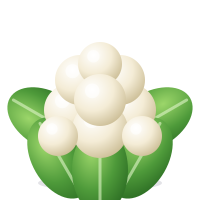 | Cauliflower | फूलगोभी | Phoolgobhi | |
 | Cabbage | पत्तागोभी | Pattagobhi | |
 | Bottle Gourd | लौकी | Lauki | |
 | Spinach | पालक | Paalak | |
 | Pumpkin | कद्दू | Kaddoo | |
 | Corn | भुट्टा | Bhutta | |
 | Capsicum | शिमला मिर्च | Shimla Mirch | |
 | Chilli | मिर्च | Mirch | |
 | Garlic | लहसुन | Lahsun | |
 | Ginger | अदरक | Adrak | |
 | Broccoli | ब्रोकली | Brokli | |
 | Mushroom | मशरूम | Mashroom | |
 | Sweet Potato | शकरकंद | Shakarkand | |
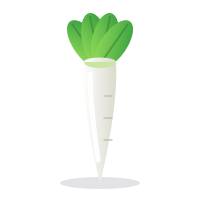 | Radish | मूली | Mooli | |
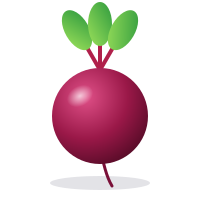 | Beetroot | चुकंदर | Chukandar | |
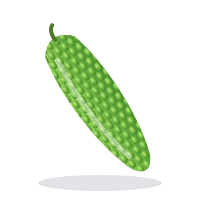 | Bitter Gourd | करेला | Karela | |
 | Green Beans | फली | Phali | |
 | Coriander | धनिया | Dhaniya | |
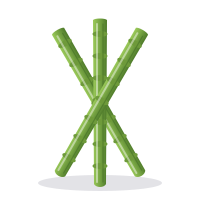 | Drumstick | सहजन | Sahjan | |
 | Ridge Gourd | तोरई | Torai | |
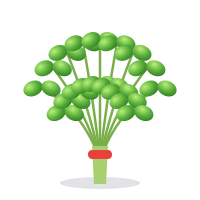 | Fenugreek Leaves | मेथी | Methi | |
 | Raw Banana | कच्चा केला | Kachcha Kela |
Every Indian kitchen is a vegetables classroom. This page teaches 30 vegetables name in Hindi and English with pictures, from the everyday आलू (aloo, potato) and टमाटर (tamatar, tomato) to लौकी (lauki, bottle gourd), तोरई (torai, ridge gourd) and सहजन (sahjan, drumstick). Each picture speaks both names in clear audio, so your child can connect the word they hear at school with the word they hear from Dadi in the kitchen.
What your child learns, age by age
Vegetables are harder than fruits for young children: many are green, many look alike, and some are only seen cooked. Go slowly and start with the ones your family eats.
| Age | Realistic goal | Start with |
|---|---|---|
| 2-3 | Understands 5 vegetable names, points to them | Potato, tomato, onion, carrot, peas |
| 3-4 (nursery) | Says about 10 names; sorts by colour | Add cucumber, brinjal, corn, pumpkin, chilli |
| 4-5 (LKG) | Names 15-20; describes shape and taste | Add okra, cauliflower, cabbage, spinach, capsicum |
| 5-6 (UKG, class 1) | Names 20-30 in both languages, knows roots vs leaves, starts reading the words | All 30, including methi, torai, karela and sahjan |
This matches most school lists: around 10 vegetables for the nursery class, 20 for UKG, and the full set as revision for class 1 and class 2.
How to use the vegetables name game
- Listen (सुनो): tap any sabzi to hear its name and a short fact, such as "Potatoes grow under the ground." Nothing to get right, so toddlers can explore freely.
- Find it (ढूँढो): Golu asks for one vegetable from 2-4 big pictures. A wrong tap is never called wrong: your child hears the name of what they tapped, the right answer glows, then Golu points to it.
- Memory (जोड़ी): find matching pairs. Good for 4-6 year olds.
The अ+A button switches between Hindi then English, English then Hindi, Hindi only and English only. Each finished round adds a marble to the Goli Jar, and tapping the jar lets you count them together. In Settings (behind a grown-up check) set your child's age to change how many pictures appear, and turn on calm motion, calm sound, captions, fewer choices or high contrast if they help.
How to teach vegetables name at home in 5-10 minutes
Here is how to teach kids fruits and vegetables without a lesson plan: use the shopping and cooking you already do.
- The sabzi mandi walk. At the market or the thelawala's cart, ask your child to spot three vegetables and say their names. "Can you see the भिंडी? How many are in the bag?"
- Unpack the bag. When the vegetables come home, name each one as it goes into the basket or fridge. Your child hands them to you one by one.
- Kitchen helper. A 3 year old can wash potatoes; a 4 year old can shell peas and count them; a 5 year old can tear spinach or pluck methi leaves.
- Feel bag. Hide a carrot, an onion or a small brinjal in a cloth bag and let your child guess by touch.
- Grow one. Plant a few methi or coriander seeds in a cup. Leaves appear in about a week, and it links to parts of a plant.
For how to teach fruits and vegetables to preschoolers: one new vegetable a day, real one in hand, name it in both languages, and play one round of Find it. That is enough.
Green vegetables, roots and leafy vegetables names in English and Hindi
Grouping helps older children remember more. This vegetables name chart sorts the game's vegetables by the part of the plant we eat, which the word list above does not show.
| Group | Vegetables (English / Hindi) |
|---|---|
| Roots and underground | Potato / आलू, carrot / गाजर, radish / मूली, beetroot / चुकंदर, sweet potato / शकरकंद, onion / प्याज़, garlic / लहसुन, ginger / अदरक |
| Leafy greens | Spinach / पालक, fenugreek leaves / मेथी, coriander / धनिया, cabbage / पत्तागोभी |
| Gourds | Bottle gourd / लौकी, ridge gourd / तोरई, bitter gourd / करेला, pumpkin / कद्दू, cucumber / खीरा |
| Pods and seeds | Peas / मटर, green beans / फली, corn / भुट्टा, drumstick / सहजन |
| Flowers | Cauliflower / फूलगोभी, broccoli / ब्रोकली |
Two questions parents often search: radish in Hindi is मूली (mooli), and okra in Hindi is भिंडी (bhindi), also called lady's finger in Indian English.
Vegetables through the Indian year
Winter brings the best carrots, peas, cauliflower, radish, methi and spinach, and gajar ka halwa. Summer is the season of lauki, torai, karela and cucumber. In the monsoon, roasted bhutta is sold on every street corner. Talking about what is in season this week gives your child new words to hear at every market trip.
How to write vegetables name in Hindi (vegetables name kaise likhe)
For 5-6 year olds, start writing with short words: मटर (matar) and गाजर (gaajar) have no matras beyond the aa, so they are easy vegetables name in Hindi to write first. Show the spelling in the word list above, trace it, then write it on a slate. In English, "pea", "corn" and "yam" are good first spellings. Two words a day is plenty.
Vegetables name chart and worksheet: print this page
There is no separate PDF, and you do not need one. The word list above is a vegetables name chart in Hindi and English with a picture, spelling and pronunciation for each item, and it prints cleanly from your browser (choose Print, then paper or "Save as PDF"). For a quick vegetables name worksheet, cover the words on the printout and ask your child to name each picture, or ask a 6 year old to write five names from memory.
What is the difference between fruits and vegetables for kids?
Keep it simple: a fruit comes from the flower and holds the seeds, and a vegetable is another part of the plant, such as a root, leaf or stem. That makes tomato, cucumber, brinjal and pumpkin fruits to a scientist, even though we cook them in sabzi. Most 5 year olds find this surprising and fun. Pair this page with fruits name in Hindi and English and play "fruit or vegetable?" with real items from your kitchen.
How to get my 4 year old to eat fruit and vegetables
Naming a vegetable, touching it and playing with it all make a child more willing to taste it. Useful, pressure-free habits:
- Small and often. A spoonful of a new sabzi next to dal-chawal they already like. Many children need 10-15 tries before they accept a new taste.
- No bribes, no fights. "You don't have to eat it, you can just touch it" keeps meals calm.
- Cook together. Children who shelled the peas want to eat the matar paneer.
- Hide and show. Grated carrot in a paratha is fine, but also serve some carrot sticks so the word and the taste meet.
- Talk about colour. "Let's eat something orange today" turns the plate into a game and links to colours in Hindi and English.
The same ideas answer how to get a 5 year old to eat vegetables, with one addition: give older children a real choice ("peas or beans tonight?"). If you are worried about your child's growth or eating, talk to your paediatrician.
Every child learns at their own pace
Praise effort ("You found it by looking carefully") rather than speed. If Find it feels hard, go back to Listen or switch on fewer choices. A child with speech delay can answer by tapping or pointing while you say the word. Autistic children may enjoy repeating the same vegetable many times; that is fine. In bilingual homes, use your strongest language and let the game give the second. Keep sessions to about 5-10 minutes and sit with your child. Under-2s learn more from a grown-up and a real potato than from any screen.
Next, try food items name for the dishes these vegetables go into, or kitchen and household items name for the kadhai and pateela they cook in.