Body parts in Japanese: word list with pictures
30 words · tap 🔊 to hear each one in Japanese.
| Picture | English | Japanese | Say it | Listen |
|---|---|---|---|---|
 | Head | あたま | atama | |
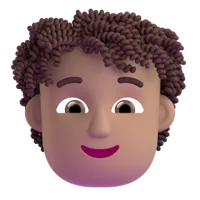 | Hair | かみのけ | kaminoke | |
 | Face | かお | kao | |
 | Eye | め | me | |
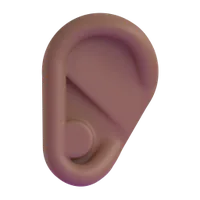 | Ear | みみ | mimi | |
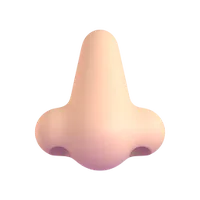 | Nose | はな | hana | |
 | Mouth | くち | kuchi | |
 | Lips | くちびる | kuchibiru | |
 | Tongue | した | shita | |
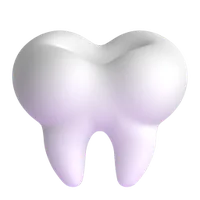 | Teeth | は | ha | |
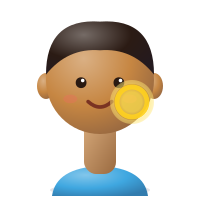 | Cheek | ほっぺ | hoppe | |
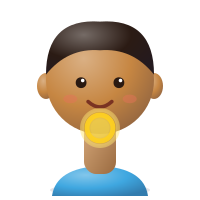 | Chin | あご | ago | |
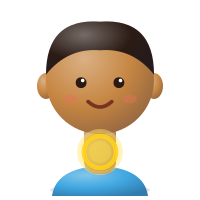 | Neck | くび | kubi | |
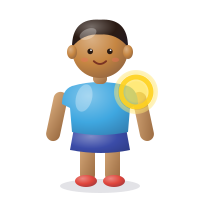 | Shoulder | かた | kata | |
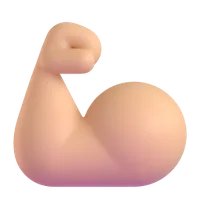 | Arm | うで | ude | |
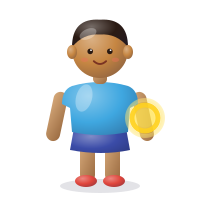 | Elbow | ひじ | hiji | |
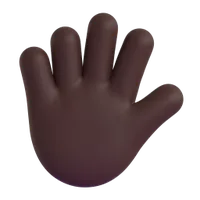 | Hand | て | te | |
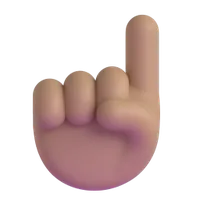 | Finger | ゆび | yubi | |
 | Thumb | おやゆび | oyayubi | |
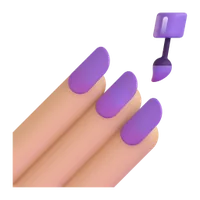 | Nail | つめ | tsume | |
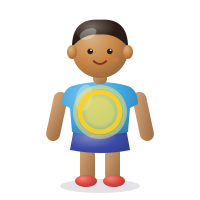 | Tummy | おなか | onaka | |
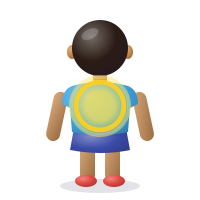 | Back | せなか | senaka | |
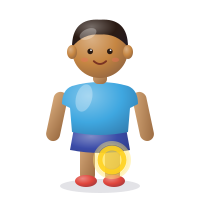 | Knee | ひざ | hiza | |
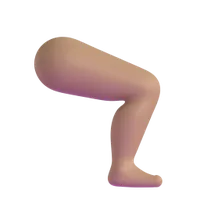 | Leg | あし | ashi | |
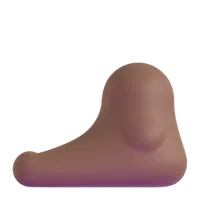 | Foot | あしのうら | ashinoura | |
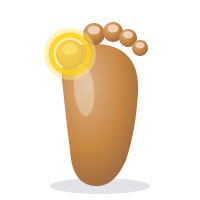 | Toe | あしのゆび | ashinoyubi | |
 | Brain | のう | nou | |
 | Heart | しんぞう | shinzou | |
 | Lungs | はい | hai | |
 | Bones | ほね | hone |
Body parts in Japanese are perfect first words because your child can point to every one of them. This page has 30 body parts with pictures, romaji and clear audio, from あたま (atama, head) and め (me, eye) down to ひざ (hiza, knee) and あしのゆび (ashi no yubi, toes), plus a few inside the body like しんぞう (shinzou, heart). Tap a picture to hear the word in Japanese and English, then play Find it and point to the same part on yourselves.
Face words in Japanese
The face is the best place to start with toddlers. Japanese face words are wonderfully short: かお (kao, face), め (eye), みみ (mimi, ear), はな (hana, nose), くち (kuchi, mouth), は (ha, teeth), した (shita, tongue), くちびる (kuchibiru, lips), ほっぺ (hoppe, cheek), あご (ago, chin) and かみのけ (kaminoke, hair). Several are just one or two syllables, so even a two-year-old can say them.
Play fukuwarai (ふくわらい), a New Year game from Japan: a blindfolded child places paper eyes, nose and mouth on a drawn face, and everyone laughs at the funny result. Name each part in Japanese as it goes on.
Head, shoulders, knees and toes in Japanese
Japanese children sing their own version of the action song: あたま、かた、ひざ、ポン (atama, kata, hiza, pon), where pon is a clap. It continues with め、みみ、はな、くち: eyes, ears, nose, mouth. Sing it slowly first, touching each part, then faster and faster until everyone is giggling. All these words are in the game, so your child can hear each one clearly afterwards.
Arms, legs, hands and feet
Going down the body: くび (kubi, neck), かた (kata, shoulder), うで (ude, arm), ひじ (hiji, elbow), て (te, hand), ゆび (yubi, finger), おやゆび (oyayubi, thumb, "parent finger"), つめ (tsume, nail), おなか (onaka, tummy), せなか (senaka, back), ひざ (knee) and あし (ashi, leg). In Japanese, あし means both leg and foot, so the game shows foot as あしのうら (ashi no ura, the sole of the foot) and toes as あしのゆび, "foot fingers". Japanese finger names are sweet too: the little finger is こゆび, "child finger".
Hana: nose or flower? Japanese homophones
Japanese has many words that sound almost the same, which children find funny. はな means both nose and flower, は means both tooth and leaf, and め means both eye and a plant bud. In careful speech the difference is in the pitch accent, a small rise or fall in the voice, but in daily life the meaning is clear from context. Hold a flower to your child's nose and say "はなに はな!" (a flower on a nose!). It is a good laugh and a memorable lesson.
Inside the body
Curious five- and six-year-olds can learn のう (nou, brain), しんぞう (heart), はい (hai, lungs) and ほね (hone, bones). After running, put your child's hand on their chest and say "しんぞうが どきどき しているね": the heart is going doki doki, the Japanese sound for a pounding heart.
Body words in daily routines
| Moment | Say it in Japanese | Meaning |
|---|---|---|
| Before eating | てを あらおう | let's wash hands |
| After meals | はを みがこう | let's brush teeth |
| Bath time | あたまを あらおう | let's wash your hair |
| A bump or fall | どこが いたい? | where does it hurt? |
| Comforting | いたいの いたいの とんでいけ | pain, pain, fly away |
"いたいの いたいの とんでいけ" is what almost every Japanese parent says while rubbing a bumped knee and "throwing" the pain away into the sky. Try it next time: it works surprisingly well. Hand washing and tooth brushing also link to good habits for kids.
Teaching tips by age, and body safety
- Age 2-3: five face words, pointing games in the mirror.
- Age 3-4: the atama kata hiza pon song and Find it.
- Age 4-5: Simon Says in Japanese: "みみを さわって" (touch your ears).
- Age 5-6: inside-the-body words and the first hiragana of each word on the hiragana chart.
Knowing body words helps with body safety too: a child who can say おなかが いたい (my tummy hurts) can tell a grown-up what is wrong. For children with speech delay, pointing is a complete answer. For bilingual kids, mixing Japanese and English in the song is perfectly normal.
For heritage and bilingual families
Bath time is the easiest place to keep Japanese body words alive: wash each part and name it. The word list above prints from your browser as a body parts chart with romaji; there is no separate PDF. Compare with body parts in Chinese, or the English body parts name page.
からだの なまえを おぼえよう
からだの なまえは、いつでも どこでも れんしゅうできます。おふろで「あたまを あらおうね」「つぎは せなか」と いいながら あらうと、しぜんに ことばを おぼえます。「あたま かた ひざ ポン」を いっしょに うたうのも おすすめです。
ころんで ないているときは、「どこが いたい?」と きいて、「いたいの いたいの とんでいけ」と やさしく なでてあげましょう。からだの なまえを いえると、こどもは じぶんの きもちや ぐあいを おとなに つたえられるように なります。
How to use this page at home
Say it, then find it
Play for a few minutes, then look for the same thing away from the screen: japanese words on the shelf, in the kitchen, on the way to school. A child learns a word properly when they meet it twice, once on the screen and once in their hand.
Ten minutes is enough
Short and happy beats long and tired. Stop while your child still wants more, and come back tomorrow: the same page on five short days teaches far more than one long sitting. Nothing here is scored, so there is no reason to push.
Use both languages
Tap the language button at the top to hear the words in your home language first and the second language after. Hearing the same picture named in two languages is one of the few things research agrees builds attention as well as vocabulary.