Fruits in Bengali: word list with pictures
30 words · tap 🔊 to hear each one in Bengali.
| Picture | English | Bengali | Say it | Listen |
|---|---|---|---|---|
 | Mango | আম | am | |
 | Banana | কলা | kola | |
 | Apple | আপেল | apel | |
 | Orange | কমলালেবু | komlalebu | |
 | Grapes | আঙুর | angur | |
 | Watermelon | তরমুজ | tormuj | |
 | Papaya | পেঁপে | penpe | |
 | Guava | পেয়ারা | peyara | |
 | Pineapple | আনারস | anarosh | |
 | Strawberry | স্ট্রবেরি | stroberi | |
 | Cherry | চেরি | cheri | |
 | Lemon | পাতিলেবু | patilebu | |
 | Coconut | নারকেল | narkel | |
 | Pear | নাশপাতি | nashpati | |
 | Pomegranate | বেদানা | bedana | |
 | Sapodilla | সবেদা | shobeda | |
 | Peach | পিচ | pich | |
 | Muskmelon | ফুটি | phuti | |
 | Kiwi | কিউই | kiui | |
 | Green Apple | সবুজ আপেল | shobuj apel | |
 | Blueberry | ব্লুবেরি | bluberi | |
 | Lime | কাগজিলেবু | kagojilebu | |
 | Jackfruit | কাঁঠাল | kanthal | |
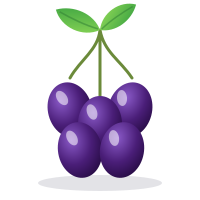 | Java Plum | জাম | jam | |
 | Lychee | লিচু | lichu | |
 | Custard Apple | আতা | ata | |
 | Plum | আলুবোখারা | alubokhara | |
 | Indian Gooseberry | আমলকী | amloki | |
 | Dates | খেজুর | khejur | |
 | Fig | ডুমুর | dumur |
Learning fruits name in Bengali is sweet work, and Bengal has some of the most loved fruits in South Asia. This page has 30 fruits with pictures and clear audio, from আম (aam, mango) and কাঁঠাল (kanthal, jackfruit) to লিচু (lichu, lychee) and আমলকী (amloki, Indian gooseberry). Tap a fruit to hear its name in Bengali and English, then play Find it or Memory. The Bengali word for fruit is ফল (phol).
First fruits to learn in Bengali
| English | Bengali | Say it | Talk about |
|---|---|---|---|
| Mango | আম | aam | sweet, summer, the picture word for আ |
| Banana | কলা | kola | yellow, peel it yourself, the picture word for ক |
| Apple | আপেল | apel | red, crunchy |
| Grapes | আঙুর | angur | small, in a bunch, count them |
| Watermelon | তরমুজ | tormuj | green outside, red inside, the picture word for ত |
Three of these are picture words on the Bengali alphabet page, so fruit time can double as letter time: "আ for আম!"
The lebu family: a Bengali pattern to spot
Bengali has a fun word family around লেবু (lebu), the citrus fruits. An orange is কমলালেবু (komlalebu), a lemon is পাতিলেবু (patilebu) and a lime is কাগজিলেবু (kagojilebu), "paper lemon", for its thin skin. Many people just say কমলা for orange, which is also the word for the colour orange. Point this out on colours in Bengali; children love it when a word does two jobs.
Famous fruits of Bengal and Bangladesh
- Mangoes: Malda in West Bengal and Rajshahi in Bangladesh are famous for mangoes like Himsagar, Langra and Fazli. Summer in a Bengali home means আম every day.
- Jackfruit: কাঁঠাল is the national fruit of Bangladesh. It is the biggest fruit on this page; ask your child to guess how heavy one is.
- Lychee: লিচু arrives in early summer, from orchards in north Bengal and Dinajpur.
- Coconut: a green tender coconut is ডাব (daab), the picture word for ড; the brown ripe one is নারকেল (narkel). Two words for one fruit, at two ages!
- Custard apple and guava: আতা (ata) and পেয়ারা (peyara) grow in many courtyards.
Fruits are part of Bengali festivals too. On Jamai Shashthi in early summer, families serve a plate of mango, lychee, jackfruit and জাম (jaam, jamun). On Pohela Boishakh, the Bengali New Year, seasonal fruits are shared. Telling your child these small stories gives each word a memory to hang on.
Fruits by season
- Grishma (summer): আম, কাঁঠাল, লিচু, জাম, তরমুজ. These are called the মধুমাস (modhumash), the "honey months".
- Rains and autumn: পেয়ারা, আতা, ডাব.
- Winter: কমলালেবু, আমলকী, খেজুর (khejur, dates; winter is also the season of date-palm jaggery).
- All year: কলা, পেঁপে (penpe, papaya), আপেল, বেদানা (bedana, pomegranate).
How to teach fruit names in Bengali at home
- Offer a choice. "কলা খাবে না আপেল?" (banana or apple?) Your child must say a word to answer.
- Bazaar trip. At the fruit stall, give one job: "Find the পেয়ারা."
- Taste words. মিষ্টি (mishti, sweet) and টক (tok, sour). পাতিলেবু টক!
- Count. Count lychees or grapes with numbers in Bengali.
- Keep it short. One game here, then eat the fruit together.
| Class | Typical list |
|---|---|
| Toddlers (2-3) | 5 fruits name in Bengali: mango, banana, apple, grapes, watermelon |
| Nursery / KG | 10 fruits, with colour and taste |
| Class 1 | 20 to 30 fruits; reading short names like আম, জাম, কলা |
Need a fruits chart in Bengali for school? Print this page from your browser. The word list with pictures prints cleanly with Bengali and English side by side.
For more practice, the fruits name in Hindi and English game uses the same 30 fruits. Children often accept a new food after meeting it many times, so naming, touching and smelling a fruit is a gentle way to try it. Never force a taste; praise curiosity.
Small Bengali sentences with fruit words
When your child knows a few names, turn them into tiny sentences. They fit naturally into snack time and teach useful words like "want", "more" and "finished":
- আমি আম খাব। (ami aam khabo) I will eat a mango.
- আর একটা লিচু দাও। (ar ekta lichu dao) Give me one more lychee.
- কলা শেষ! (kola shesh) The banana is finished!
- পেয়ারাটা সবুজ। (peyarata shobuj) The guava is green.
For children growing up abroad, short sentences like these matter more than long lists. A child who can ask দিদা or নানু for a mango in Bangla on a video call has real, living Bengali. Pair fruit words with animals too: who eats the কলা? The বাঁদর, on animals name in Bengali.
অভিভাবকদের জন্য
ফলের নাম শেখানো খুব সহজ, খেতে খেতেই শেখানো যায়। "কলা খাবে না আপেল?" জিজ্ঞেস করুন। উত্তর দিতে গিয়ে শিশু বাংলা শব্দ বলবে।
মধুমাসের গল্প বলুন: আম, কাঁঠাল, লিচু, জাম। কমলালেবু, পাতিলেবু, কাগজিলেবু, সবই লেবুর পরিবার, এটা দেখান। বাজারে গেলে শিশুকে একটা ফল খুঁজে বের করতে বলুন।
এই পাতায় তিরিশটি ফল আছে। ছবিতে ছুঁলে নাম শোনা যায়। সবটাই বিনামূল্যে।
How to use this page at home
Say it, then find it
Play for a few minutes, then look for the same thing away from the screen: bengali words on the shelf, in the kitchen, on the way to school. A child learns a word properly when they meet it twice, once on the screen and once in their hand.
Ten minutes is enough
Short and happy beats long and tired. Stop while your child still wants more, and come back tomorrow: the same page on five short days teaches far more than one long sitting. Nothing here is scored, so there is no reason to push.
Use both languages
Tap the language button at the top to hear the words in your home language first and the second language after. Hearing the same picture named in two languages is one of the few things research agrees builds attention as well as vocabulary.