Body parts in Italian: word list with pictures
30 words · tap 🔊 to hear each one in Italian.
| Picture | English | Italian | Say it | Listen |
|---|---|---|---|---|
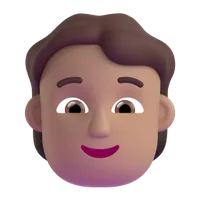 | Head | testa | ||
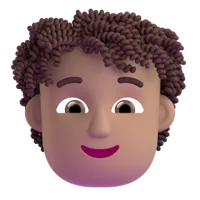 | Hair | capelli | ||
 | Face | faccia | ||
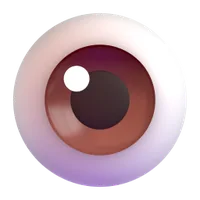 | Eye | occhio | ||
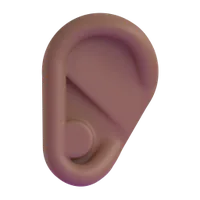 | Ear | orecchio | ||
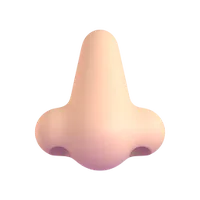 | Nose | naso | ||
 | Mouth | bocca | ||
 | Lips | labbra | ||
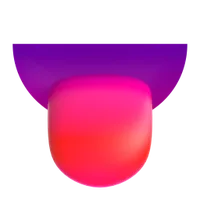 | Tongue | lingua | ||
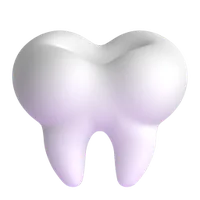 | Teeth | denti | ||
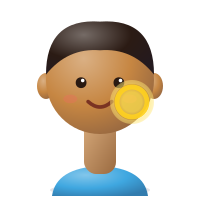 | Cheek | guancia | ||
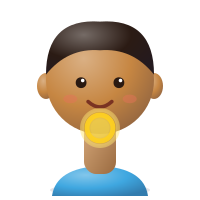 | Chin | mento | ||
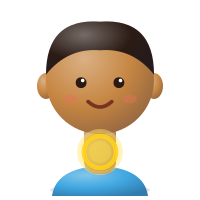 | Neck | collo | ||
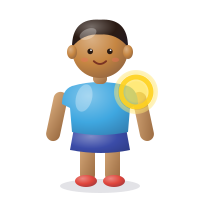 | Shoulder | spalla | ||
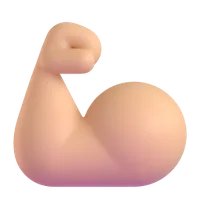 | Arm | braccio | ||
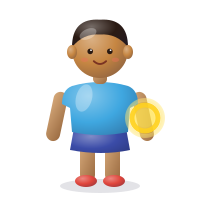 | Elbow | gomito | ||
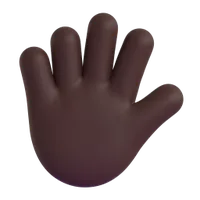 | Hand | mano | ||
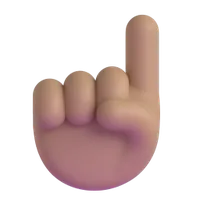 | Finger | dito | ||
 | Thumb | pollice | ||
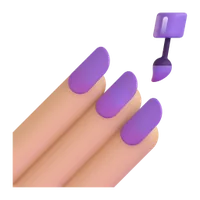 | Nail | unghia | ||
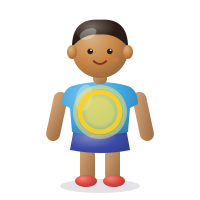 | Tummy | pancia | ||
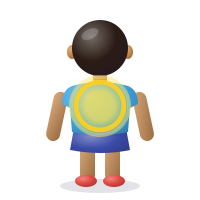 | Back | schiena | ||
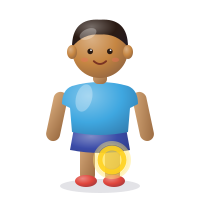 | Knee | ginocchio | ||
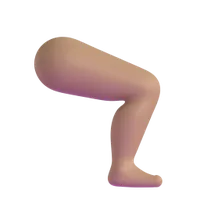 | Leg | gamba | ||
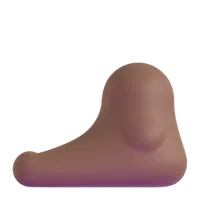 | Foot | piede | ||
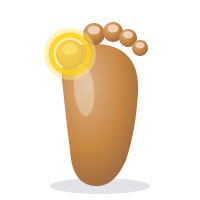 | Toe | dito del piede | ||
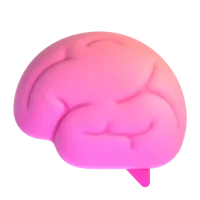 | Brain | cervello | ||
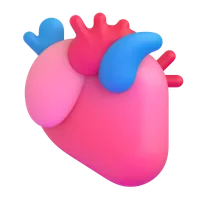 | Heart | cuore | ||
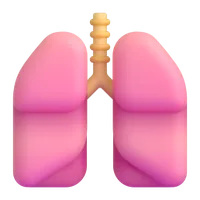 | Lungs | polmoni | ||
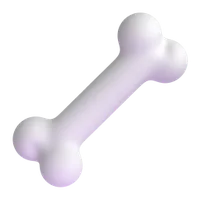 | Bones | ossa |
Body parts in Italian are useful from the very first day: at bath time, getting dressed, singing and telling a grown-up where it hurts. This page has 30 body parts with pictures and clear audio, from testa (head), naso (nose) and pancia (tummy) to cuore (heart) and ossa (bones). Tap a picture to hear the Italian and English word, then play Find it.
Parts of the face in Italian
Start with the face, where your child can touch each part: faccia (face), occhio (eye), orecchio (ear), naso (nose), bocca (mouth), labbra (lips), lingua (tongue), denti (teeth), guancia (cheek) and mento (chin). Hair is capelli, always plural for the hair on your head. Fun fact: lingua means both tongue and language, just as English "tongue" once did.
Arms, legs and the inside of the body
Next come the big parts: collo (neck), spalla (shoulder), braccio (arm), gomito (elbow), mano (hand), dito (finger), pollice (thumb), unghia (nail), pancia (tummy), schiena (back), gamba (leg), ginocchio (knee), piede (foot) and dito del piede (toe, literally "finger of the foot"). For curious five- and six-year-olds, the list also has cervello (brain), cuore (heart), polmoni (lungs) and ossa (bones).
One and two: Italian body plurals
Italian body words have some surprising plurals, and children hear them all the time. Several masculine words become feminine and end in -a in the plural.
| One | Two or more | English |
|---|---|---|
| il braccio | le braccia | arm / arms |
| il dito | le dita | finger / fingers |
| il ginocchio | le ginocchia | knee / knees |
| il labbro | le labbra | lip / lips |
| l'osso | le ossa | bone / bones |
| la mano | le mani | hand / hands |
Regular ones follow the usual pattern: un occhio, due occhi; una gamba, due gambe; un piede, due piedi. Count together with numbers in Italian: "Quante dita hai?" "Dieci!"
Songs Italian children sing
Italian children sing "Testa, spalle, ginocchia e piedi", the Italian version of "Head, shoulders, knees and toes", touching each part and speeding up. Finger rhymes name the five fingers, often starting with pollice (thumb). In the scuola dell'infanzia, "the body and movement" (il corpo e il movimento) is one of the five official fields of experience, so children play body games, dance and learn body words every week.
How to teach body parts in Italian at home
- Bath time. Wash and name: "Adesso laviamo i piedi." (Now we wash your feet.)
- Touch game. "Tocca il naso!" (Touch your nose!) Speed it up, then swap roles.
- Doll doctor. Play dottore with a teddy and name its orecchie, occhi and pancia.
- Body drawing. Draw around your child on big paper and label the parts in Italian.
- Useful phrase. Teach "Mi fa male la pancia" (My tummy hurts) so your child can tell a teacher.
If you have just moved to Italy, practise these words before the first visit to the pediatra (children's doctor). Every child in Italy is assigned a family paediatrician, and knowing a few body words helps your child feel safe.
What to expect by age
At two to three, children point to five to ten body parts and say some: naso, occhi, pancia. At three to four, they name most face parts and the big body parts. At four to five, they learn elbow, shoulder, chin and cheek, and hear the tricky plurals. At five to six, they talk about the heart, brain and bones. Body words also help children speak up for themselves: teach that their body belongs to them, that they can say "No" and tell a trusted grown-up. Keep screen time short and shared. For English and Hindi words, see body parts name in Hindi and English, or compare the body parts in Spanish. O come orso and N come nave are on the Italian alphabet cards too.
Italians are famous for talking with their hands, and gestures are a fun extra for body-word learning. Pinching the fingertips together and shaking the hand means "What do you want?", and gently pulling down the lower eyelid with one finger means "Watch out!". Show your child a few and name the body part you use: la mano, le dita, l'occhio.
Le parti del corpo per bambini
In questa pagina vostro figlio impara 30 parti del corpo con immagine e audio: testa, capelli, occhi, orecchie, naso, bocca, mani, piedi e molte altre. Toccate un'immagine e ascoltate il nome in italiano e in inglese.
Cantate insieme „Testa, spalle, ginocchia e piedi”, nominate le parti del corpo durante il bagnetto e giocate a „Tocca il naso!”. Così il bambino collega ogni parola al proprio corpo e la ricorda facilmente.
How to use this page at home
Say it, then find it
Play for a few minutes, then look for the same thing away from the screen: italian words on the shelf, in the kitchen, on the way to school. A child learns a word properly when they meet it twice, once on the screen and once in their hand.
Ten minutes is enough
Short and happy beats long and tired. Stop while your child still wants more, and come back tomorrow: the same page on five short days teaches far more than one long sitting. Nothing here is scored, so there is no reason to push.
Use both languages
Tap the language button at the top to hear the words in your home language first and the second language after. Hearing the same picture named in two languages is one of the few things research agrees builds attention as well as vocabulary.