Fruits in German: word list with pictures
30 words · tap 🔊 to hear each one in German.
| Picture | English | German | Say it | Listen |
|---|---|---|---|---|
 | Mango | die Mango | ||
 | Banana | die Banane | ||
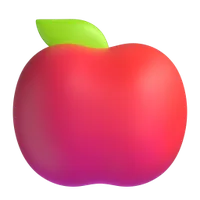 | Apple | der Apfel | ||
 | Orange | die Orange | ||
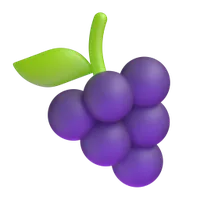 | Grapes | die Weintrauben | ||
 | Watermelon | die Wassermelone | ||
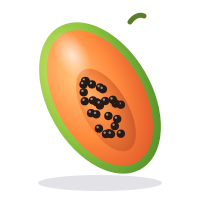 | Papaya | die Papaya | ||
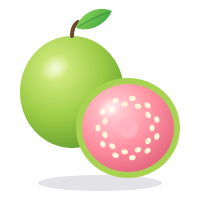 | Guava | die Guave | ||
 | Pineapple | die Ananas | ||
 | Strawberry | die Erdbeere | ||
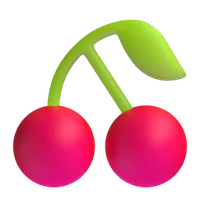 | Cherry | die Kirsche | ||
 | Lemon | die Zitrone | ||
 | Coconut | die Kokosnuss | ||
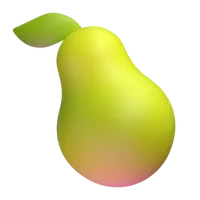 | Pear | die Birne | ||
 | Pomegranate | der Granatapfel | ||
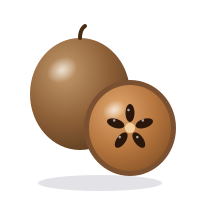 | Sapodilla | die Sapote | ||
 | Peach | der Pfirsich | ||
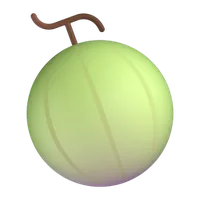 | Muskmelon | die Honigmelone | ||
 | Kiwi | die Kiwi | ||
 | Green Apple | der grüne Apfel | ||
 | Blueberry | die Heidelbeere | ||
 | Lime | die Limette | ||
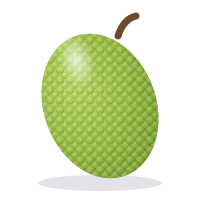 | Jackfruit | die Jackfrucht | ||
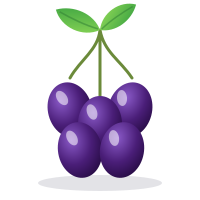 | Java Plum | die Jambolan-Pflaume | ||
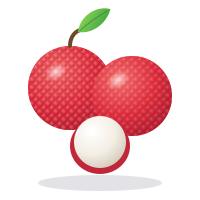 | Lychee | die Litschi | ||
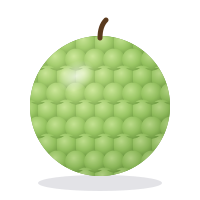 | Custard Apple | der Zuckerapfel | ||
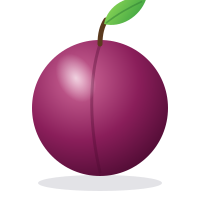 | Plum | die Pflaume | ||
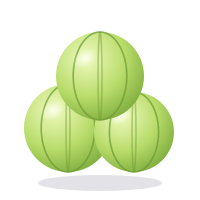 | Indian Gooseberry | die Amla | ||
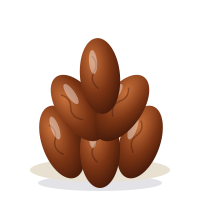 | Dates | die Datteln | ||
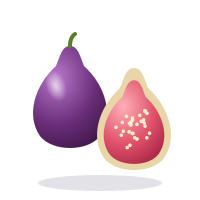 | Fig | die Feige |
Fruits in German are easy, tasty first words, because your child can see, touch and eat them. This page has 30 fruits with pictures and clear audio, from everyday favourites like der Apfel (apple), die Banane (banana) and die Erdbeere (strawberry) to tropical fruits like die Mango, die Ananas (pineapple) and die Litschi (lychee). Tap a picture to hear the German and English name, then play Find it or Memory.
The first fruits in German to learn
Begin with fruits your child eats every week. In Germany the top fruits for children are der Apfel, die Banane, die Birne (pear), die Weintrauben (grapes), die Erdbeere and die Orange. Many families also say die Apfelsine for orange, especially in northern Germany, so do not be surprised if a teacher uses it.
Some German fruit names are fun to take apart. Erdbeere means "earth berry" because strawberries grow near the ground. Heidelbeere (blueberry) means "heath berry". Granatapfel (pomegranate) is "grenade apple" and Wassermelone is simply "water melon". Point out these parts and your child starts to guess new words.
Fruits by season in Germany
German families follow the seasons closely, and the weekly Wochenmarkt (market) changes through the year. Talking about seasons is a lovely way to repeat fruit names.
| Season | Local fruits | What families do |
|---|---|---|
| Early summer | Erdbeeren, Kirschen | Pick your own strawberries at an Erdbeerfeld |
| Summer | Heidelbeeren, Pfirsiche | Berry cake and fruit ice lollies |
| Late summer | Pflaumen (Zwetschgen) | Bake plum cake, Zwetschgenkuchen |
| Autumn | Äpfel, Birnen | Apple picking, apple juice, Apfelschorle |
| Winter | Orangen, Mandarinen | Oranges and nuts in the boot on Nikolaus day, 6 December |
Our fruit list is shared with the Indian pages on this site, so it also has Indian fruits such as die Guave, die Jackfrucht and die Amla. Many of them are rare in German shops, so treat them as a trip around the world.
Der, die, das with fruit
Most fruits in German are feminine and take die: die Banane, die Birne, die Kirsche, die Zitrone. The apple family is an exception: der Apfel, der Granatapfel, der Zuckerapfel. Children learn this pattern by ear. For more than one, German changes the ending or the vowel: ein Apfel, zwei Äpfel. This is a great moment to count fruit together with numbers in German.
How to teach fruit names in German at home
- Fruit bowl game. Put three real fruits on the table and ask "Wo ist die Banane?"
- Market helper. At the shop, let your child find and name each fruit before it goes in the bag.
- Colour sort. Sort fruits by colour and name both: "Die Erdbeere ist rot." Pair it with colours in German.
- Taste test. Blindfold game: taste a piece and guess the fruit in German.
- Snack time phrases. "Möchtest du einen Apfel?" (Would you like an apple?) "Ja, bitte!"
German kindergartens often have an Obsttag or a shared fruit plate at breakfast time. If your child goes to a Kita, practise the fruit names they will see there.
What to expect by age
At two to three, children learn five or six fruit names and love tapping the pictures. At three to four, they name ten or more fruits and match them to colours. At four to five, they use sentences with ich mag (I like): "Ich mag Kirschen." At five to six, they sort fruits by season or by where they grow. Never force a child to eat a fruit to "learn" it; a picture and a sniff are enough. Keep screen time short and shared, then move to the real fruit bowl. For English and Hindi names, see fruits name in Hindi and English.
For bilingual families, fruit is one of the easiest topics to share across languages, because many names are similar: Banane, Mango, Kiwi and Ananas sound close to other European languages. Start with those "friendly" words to build confidence, then move to the new ones like Birne and Erdbeere.
Obst für Kinder lernen
Hier lernt Ihr Kind 30 Obstsorten mit Bild und Ton: den Apfel, die Banane, die Birne, die Erdbeere, die Kirsche und viele mehr. Tippen Sie auf ein Bild, und Ihr Kind hört das Wort auf Deutsch und auf Englisch.
Nehmen Sie Ihr Kind mit auf den Wochenmarkt und lassen Sie es das Obst benennen. Zählen Sie die Äpfel, sortieren Sie das Obst nach Farben und sprechen Sie über die Jahreszeiten: Erdbeeren im Juni, Zwetschgen im Spätsommer, Äpfel im Herbst.
How to use this page at home
Say it, then find it
Play for a few minutes, then look for the same thing away from the screen: german words on the shelf, in the kitchen, on the way to school. A child learns a word properly when they meet it twice, once on the screen and once in their hand.
Ten minutes is enough
Short and happy beats long and tired. Stop while your child still wants more, and come back tomorrow: the same page on five short days teaches far more than one long sitting. Nothing here is scored, so there is no reason to push.
Use both languages
Tap the language button at the top to hear the words in your home language first and the second language after. Hearing the same picture named in two languages is one of the few things research agrees builds attention as well as vocabulary.