Fruits in Russian: word list with pictures
30 words · tap 🔊 to hear each one in Russian.
| Picture | English | Russian | Say it | Listen |
|---|---|---|---|---|
 | Mango | Манго | Mango | |
 | Banana | Банан | Banan | |
 | Apple | Яблоко | Yabloko | |
 | Orange | Апельсин | Apelsin | |
 | Grapes | Виноград | Vinograd | |
 | Watermelon | Арбуз | Arbuz | |
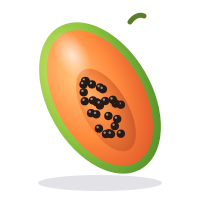 | Papaya | Папайя | Papayya | |
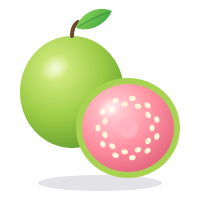 | Guava | Гуава | Guava | |
 | Pineapple | Ананас | Ananas | |
 | Strawberry | Клубника | Klubnika | |
 | Cherry | Вишня | Vishnya | |
 | Lemon | Лимон | Limon | |
 | Coconut | Кокос | Kokos | |
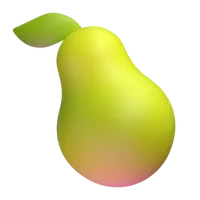 | Pear | Груша | Grusha | |
 | Pomegranate | Гранат | Granat | |
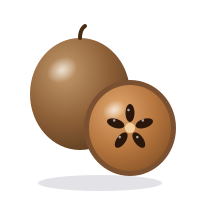 | Sapodilla | Саподилла | Sapodilla | |
 | Peach | Персик | Persik | |
 | Muskmelon | Дыня | Dynya | |
 | Kiwi | Киви | Kivi | |
 | Green Apple | Зелёное яблоко | Zelyonoe yabloko | |
 | Blueberry | Черника | Chernika | |
 | Lime | Лайм | Laym | |
 | Jackfruit | Джекфрут | Dzhekfrut | |
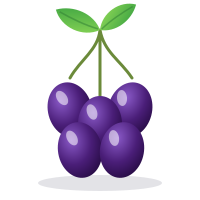 | Java Plum | Джамун | Dzhamun | |
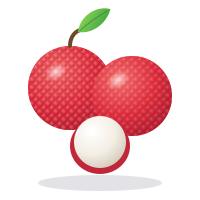 | Lychee | Личи | Lichi | |
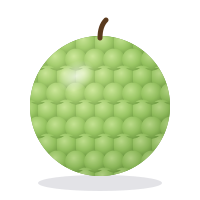 | Custard Apple | Сахарное яблоко | Sakharnoe yabloko | |
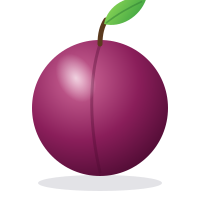 | Plum | Слива | Sliva | |
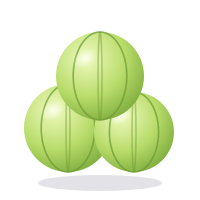 | Indian Gooseberry | Амла | Amla | |
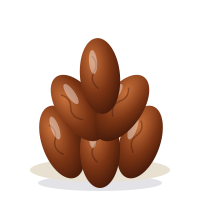 | Dates | Финики | Finiki | |
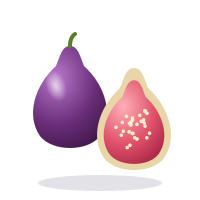 | Fig | Инжир | Inzhir |
Fruits name in Russian is a sweet topic for young learners: children see fruit every day, they can hold it, smell it and eat it, and the Russian words are short and clear. This page has 30 fruits with pictures and clear audio, from everyday яблоко (apple), банан (banana) and груша (pear) to арбуз (watermelon), гранат (pomegranate) and инжир (fig). Tap a picture to hear the Russian name, then the English one, and play Find it when your child is ready.
Everyday fruits in Russian
Begin with the fruits in your own kitchen. In Russian-speaking homes the classics are яблоко (apple), груша (pear), банан, апельсин (orange), лимон (lemon) and виноград (grapes). A fun fact for curious children: апельсин comes from Dutch and literally means "apple from China". The green apple card is simply зелёное яблоко, a nice way to connect fruit with colours in Russian.
Berries and summer fruit
Summer is berry season, and many families grow fruit at the дача, a small country house with a garden. Children pick клубника (strawberry), вишня (cherry), черника (blueberry) and слива (plum), and in late summer they wait for a huge striped арбуз and a sweet дыня (melon) from the market. Russian has a separate word for berries, ягоды, and children use it all the time: "Пойдём собирать ягоды!" ("Let's go and pick berries!").
Tropical fruits in Russian
Many tropical fruits keep a name close to English or Hindi, which is a small gift for families in India or Southeast Asia: манго, папайя, гуава, ананас, киви, кокос, личи. Some are rarer in Russia and have borrowed names on our cards, such as джекфрут, джамун and амла. The custard apple is сахарное яблоко, "sugar apple". Dates are финики, a word children usually hear in the plural.
One fruit, many fruits
Russian changes the ending for "many": банан → бананы, груша → груши, слива → сливы. Grapes, виноград, is a "together" word like "rice" in English, so one grape is виноградинка. You never need to teach rules at 3 or 4. Just count real fruit: "Одно яблоко, два яблока!"
| Colour | Fruits on this page |
|---|---|
| Красный (red) | яблоко, клубника, вишня, гранат |
| Жёлтый (yellow) | банан, лимон, ананас, манго |
| Зелёный (green) | киви, лайм, зелёное яблоко, гуава |
| Оранжевый (orange) | апельсин, папайя, персик |
| Фиолетовый (purple) | слива, виноград, черника, джамун |
Fruit games at home and at the market
- Fruit bowl Find it. Put three real fruits on the table and ask "Где груша?"
- Mystery bag. Hide a fruit in a bag; your child feels it and guesses the Russian name.
- Market helper. At the shop, ask your child to find бананы or апельсины.
- Taste and tell. сладкий (sweet) or кислый (sour)? A lemon is a guaranteed laugh.
- Letter link. А – арбуз and Я – яблоко open and close the Russian alphabet.
Worksheet idea: print this page from your browser and let your child colour or circle the fruits they tasted this week.
At 2-3, five fruit names is a great start. At 3-4 children name 10-15 fruits and their colours. At 5-6, they may read short words like киви, лайм, кокос. Continue with vegetables in Russian, the English and Hindi fruits name page, or compare with fruits in Ukrainian, where watermelon is кавун.
Tips for bilingual and diaspora families
Food is one of the easiest ways to keep Russian alive at home, because you eat together every day. Make snack time a Russian-only moment: offer two fruits and ask "Что ты хочешь, яблоко или банан?" ("What would you like, an apple or a banana?"). A choice question invites your child to say the word, which builds speaking and not only listening. If your child replies in English, repeat the Russian name kindly and hand over the fruit anyway; there is no need to correct. On video calls, grandparents can hold up fruit from their own kitchen for a long-distance "Find it" game. When you shop in a supermarket abroad, read the labels aloud in both languages, which also shows your child that words can be translated.
Fruit in everyday Russian food
Many fruit words appear in family cooking. Summer berries are boiled into варенье (jam) for winter tea, and fruit is cooked into a drink called компот. Baked apples and apple pie (шарлотка) are autumn favourites. Cooking together gives your child extra chances to hear яблоко, вишня and слива in a warm, real setting.
Фрукты для детей с картинками
На этой странице 30 фруктов и ягод с картинками и звуком: яблоко, груша, банан, клубника, вишня, арбуз и многие другие. Нажмите на картинку, и ребёнок услышит слово по-русски и по-английски.
Покупайте фрукты вместе, называйте их цвет и вкус, считайте их на столе. Летом собирайте ягоды на даче или в парке. Так ребёнок запомнит слова и полюбит полезную еду.
How to use this page at home
Say it, then find it
Play for a few minutes, then look for the same thing away from the screen: russian words on the shelf, in the kitchen, on the way to school. A child learns a word properly when they meet it twice, once on the screen and once in their hand.
Ten minutes is enough
Short and happy beats long and tired. Stop while your child still wants more, and come back tomorrow: the same page on five short days teaches far more than one long sitting. Nothing here is scored, so there is no reason to push.
Use both languages
Tap the language button at the top to hear the words in your home language first and the second language after. Hearing the same picture named in two languages is one of the few things research agrees builds attention as well as vocabulary.