Fruits in Korean: word list with pictures
30 words · tap 🔊 to hear each one in Korean.
| Picture | English | Korean | Say it | Listen |
|---|---|---|---|---|
 | Mango | 망고 | manggo | |
 | Banana | 바나나 | banana | |
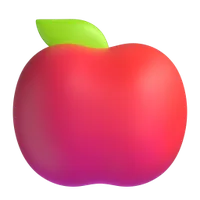 | Apple | 사과 | sagwa | |
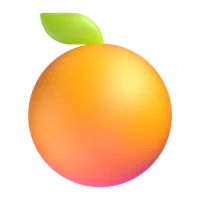 | Orange | 오렌지 | orenji | |
 | Grapes | 포도 | podo | |
 | Watermelon | 수박 | subak | |
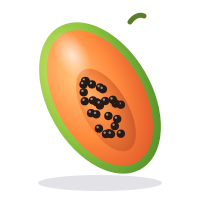 | Papaya | 파파야 | papaya | |
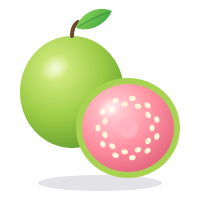 | Guava | 구아바 | guaba | |
 | Pineapple | 파인애플 | painaepeul | |
 | Strawberry | 딸기 | ttalgi | |
 | Cherry | 체리 | cheri | |
 | Lemon | 레몬 | remon | |
 | Coconut | 코코넛 | kokoneot | |
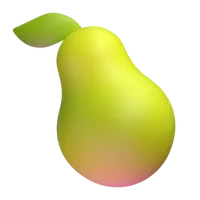 | Pear | 배 | bae | |
 | Pomegranate | 석류 | seokryu | |
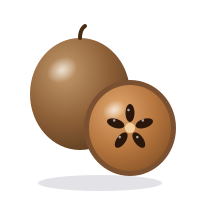 | Sapodilla | 사포딜라 | sapodilla | |
 | Peach | 복숭아 | boksunga | |
 | Muskmelon | 멜론 | mellon | |
 | Kiwi | 키위 | kiwi | |
 | Green Apple | 초록 사과 | chorok sagwa | |
 | Blueberry | 블루베리 | beulluberi | |
 | Lime | 라임 | raim | |
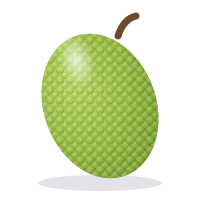 | Jackfruit | 잭프루트 | jaekpeuruteu | |
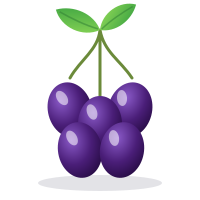 | Java Plum | 자문 | jamun | |
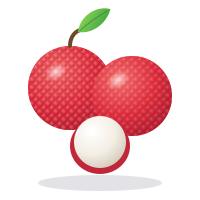 | Lychee | 리치 | richi | |
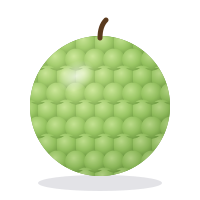 | Custard Apple | 커스터드 애플 | keoseuteodeu aepeul | |
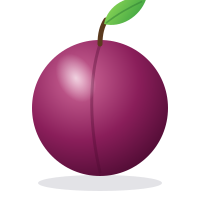 | Plum | 자두 | jadu | |
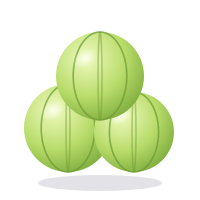 | Indian Gooseberry | 암라 | amra | |
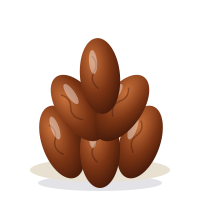 | Dates | 대추야자 | daechuyaja | |
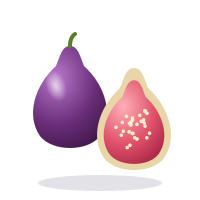 | Fig | 무화과 | muhwagwa |
Fruits name in Korean is a lovely everyday topic: Korean families eat fruit after almost every meal, often peeled and sliced by a parent or grandparent, so there are many chances to use the words. This page has 30 fruits with pictures, romanization and clear audio, from 사과 (sagwa, apple) and 바나나 (banana) to 복숭아 (boksunga, peach) and 무화과 (muhwagwa, fig). Tap a picture to hear it in Korean and English, then play Find it when a few fruits feel familiar.
First fruits in Korean for toddlers
The Korean word for fruit is 과일 (gwail). Start with seven everyday fruits: 사과 (apple), 바나나 (banana), 딸기 (ttalgi, strawberry), 포도 (podo, grapes), 수박 (subak, watermelon), 배 (bae, pear) and 귤 or 오렌지 (orenji, orange). Most are two syllables, perfect for a two-year-old. Hold up the real fruit each time you say the name.
Some fruit names are borrowed from English and sound familiar: 바나나, 망고 (manggo), 키위 (kiwi), 레몬 (remon), 멜론 (mellon), 체리 (cheri) and 블루베리 (beulluberi). Children learning English and Korean together get easy wins from these. Others are pure Korean and worth extra practice: 딸기, 수박, 복숭아, 자두 (jadu, plum) and 석류 (seokryu, pomegranate).
배: pear, tummy or boat?
The Korean word 배 (bae) has three meanings: pear, tummy and boat. Korean children love the joke "배를 먹어서 배가 불러요" (I ate a pear, so my tummy is full). Show a pear, pat your tummy and draw a boat to act out all three. You will find the tummy in the body parts in Korean game too. The Korean pear itself is round, crisp and very juicy, quite different from a European pear.
Seasonal fruits in Korea
| Season | Fruits | What families do |
|---|---|---|
| Winter to spring | 딸기 strawberry, 귤 tangerine | Strawberry picking in greenhouses; boxes of Jeju tangerines at home |
| Summer | 수박 watermelon, 복숭아 peach, 자두 plum | Cold watermelon after a hot day; watermelon is often cut into cubes for 화채, a fruit punch |
| Autumn | 사과 apple, 배 pear, 포도 grapes | The best apples and pears are saved for Chuseok |
Fruits at Chuseok and Seollal
At Chuseok, the autumn harvest festival, and at Seollal, the Lunar New Year, many families prepare a table of food to honour their ancestors, called 차례상. Apples, pears and other fruits are placed in neat rows, and boxes of beautiful apples and pears are given as holiday gifts. Children help carry fruit and count it: 사과 하나, 둘, 셋. It is a good moment to practise numbers in Korean and fruit names together.
How to teach fruits in Korean at home
- After-dinner fruit. Say each fruit as you cut it: "사과 먹을래?" (Want some apple?).
- Colour and fruit. 빨간 사과, 노란 바나나: combine with colours in Korean.
- Market game. At the shop or a Korean mart, ask "수박 어디 있어?", the same question Golu asks.
- First letters. Five-year-olds can find ㅅ for 사과 and ㅍ for 포도 on the Korean alphabet chart.
- Taste test. Blindfold your child, give a small piece and let them guess the fruit in Korean.
Keep it to five or ten minutes, together. If your child would rather eat the strawberry than name it, that is fine: tasting is learning too.
Apple, strawberry, watermelon: quick answers
Apple in Korean is 사과 (sagwa), which also means "apology", so a gift of apples can be a sweet way to say sorry. Strawberry in Korean is 딸기 (ttalgi), and strawberry milk, 딸기 우유, is a favourite Korean drink. Watermelon in Korean is 수박 (subak), grapes in Korean are 포도 (podo), peach in Korean is 복숭아 and banana in Korean is 바나나.
For heritage and diaspora families
This page also includes fruits common in India and Southeast Asia, such as guava, jackfruit, Java plum (자문) and Indian gooseberry (암라), which helps Korean families living there talk about the fruit they actually buy. The word list above prints from your browser as a Korean fruits chart with romanization; there is no separate PDF. When fruits are going well, try vegetables in Korean, or compare with fruits in Japanese.
과일 이름, 이렇게 놀아요
저녁을 먹고 과일을 깎을 때가 한국어를 배우기 좋은 시간이에요. "사과 먹을래? 배 먹을래?" 하고 물어보면서 과일 이름을 말해 보세요. 아이가 손가락으로 가리키기만 해도 충분해요.
"배"는 과일도 되고, 우리 몸의 배도 되고, 물에 뜨는 배도 돼요. 아이와 함께 배를 먹고 배를 두드리며 웃어 보세요. 추석에는 사과와 배를 함께 세어 보고, 여름에는 시원한 수박을 먹으며 "수박"이라고 말해 보세요. 잘하면 많이 칭찬해 주세요.
How to use this page at home
Say it, then find it
Play for a few minutes, then look for the same thing away from the screen: korean words on the shelf, in the kitchen, on the way to school. A child learns a word properly when they meet it twice, once on the screen and once in their hand.
Ten minutes is enough
Short and happy beats long and tired. Stop while your child still wants more, and come back tomorrow: the same page on five short days teaches far more than one long sitting. Nothing here is scored, so there is no reason to push.
Use both languages
Tap the language button at the top to hear the words in your home language first and the second language after. Hearing the same picture named in two languages is one of the few things research agrees builds attention as well as vocabulary.